
Tune details
Music: Django Reinhardt
Documented in archive: 1943
Original key: Not established
Study level: Accessible form; intermediate articulation
 Djangopedia
A major blues with room for rhythmic wit, chordal punctuation and bright guitar tone. Its apparent simplicity makes phrase placement, space and a clear return to bar one especially exposed.
Make the blues form clear even when half the phrase is silence.
Owner content reviewed — 2026-10-04T17:06:17Z by admin. Coverage measures presence, not accuracy. Content review does not certify rights or musical perfection.
Django recordings for this tune. Uploader dates and take labels remain source claims; only an evidenced exact association enables a row’s Listen control.
Uploader identifies this as Django Reinhardt’s performance; recording date and take require comparison with the discography.
| Entry | Year | Recording / session / release evidence | Listen |
|---|---|---|---|
| 01 | 1943 | Blues Clair,OSW 328-1 ,"Fremeaux FA 312, Classics 905, Jazz Time 799991-2, GLO 139, Blue Note CDP 7243837138-2, Mosaic MD6-190(6 CD Set)." | — |
| 02 | 1947 | Blues Clair, 25/8/47, "Fremeaux FA 314, Vogue 228E 6006, Vogue 668003-2, Legacy 411(""Gypsy With A Song"")"," - Paris - Souvenirs de Django - Django Reinhardt (g), Maurice Meunier (cl), Eddie Bernard (p), Eugene Vees (g), Emmanuel Soudieux (b), Jacques Martinon (d)" | — |
A dash means no video has been associated with this exact historical recording. Tune-level listening resources remain available above.
The inherited introduction says the first recording was in August 1947, but its own discography also lists OSW 328-1, an earlier matrix associated with 1943. The conflicting evidence is retained; the 1947 claim is not repeated as established fact.
Music: Django Reinhardt
Documented in archive: 1943
Original key: Not established
Study level: Accessible form; intermediate articulation
Listening task: Imitate the length and placement of a short blues answer, not just its pitches. Count the head before comparing solo choruses.
Blues Clair,OSW 328-1 ,"Fremeaux FA 312, Classics 905, Jazz Time 799991-2, GLO 139, Blue Note CDP 7243837138-2, Mosaic MD6-190(6 CD Set)."
Compare the tempo, key, introduction and final cadence with the first entry. Make the blues form clear even when half the phrase is silence.
Blues Clair, 25/8/47, "Fremeaux FA 314, Vogue 228E 6006, Vogue 668003-2, Legacy 411(""Gypsy With A Song"")"," - Paris - Souvenirs de Django - Django Reinhardt (g), Maurice Meunier (cl), Eddie Bernard (p), Eugene Vees (g), Emmanuel Soudieux (b), Jacques Martinon (d)"
Count its form and check its key before joining in. Use a 12-bar C blues as the learning framework: tonic, F7 in the middle, and a ii–V return. The imported text contains 13 cells, so it is preserved as an edition problem rather than silently presented as a reliable bar count.
Use a 12-bar C blues as the learning framework: tonic, F7 in the middle, and a ii–V return. The imported text contains 13 cells, so it is preserved as an edition problem rather than silently presented as a reliable bar count.
The inherited text contains 13 cells. The 12-bar grid below is an editorial practice reduction, not a transcription of a Django take.
[[Image:Blues_clair.gif]]


| C/// | C/// | C/// | C/// | C7/// | F7/// | F7/// | C/// | C(/E)/ Eb0/ |

| Dm7/// | G7///| C/// | G7/// :||
Original source ↗
gael rouilhac · 5:43
Checked 2026-09-20
Highest displayed view count among matching backing-track videos returned by relevance and view-count YouTube searches. Not a complete platform-wide ranking.
Gonzalo Bergara · 1:59
Guitare Improvisation · 5:15
Guitare Improvisation · 5:21
Performed studies, transcriptions, TAB, notation and lessons for studying Django’s solo. Resources are described by their creator; inclusion does not certify note-for-note accuracy.
DjangoKOR · source-described; accuracy not independently verified
Creator presents a study of Django’s recorded solo. Use it alongside the original recording; exact transcription accuracy has not been independently reviewed.
Checked 2026-10-02
Follow a shared key, a harmonic idea or a familiar form. Keys refer to this site’s chart editions; other recordings may use a different key.
Showing 8 of 20 matches. Explore the full catalogue →
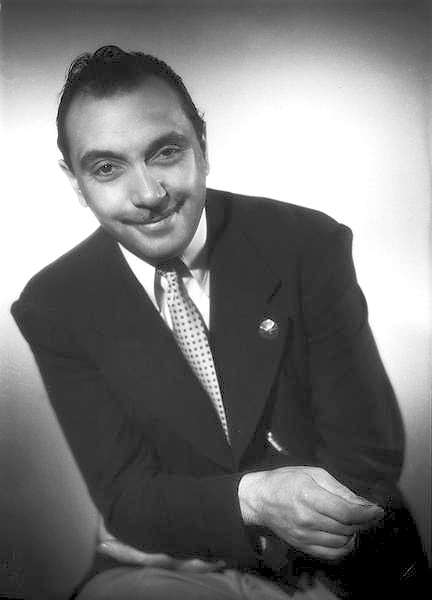
Chosen as a view of Django from 1944, to place the study beside his changing performing life. The closest dated recording entry here is 1947. This is an editorial pairing; the photograph is not claimed to depict a performance or session of this tune.
A formal Studio Harcourt portrait. The credited studio and year come from the linked file record. The portrait is not a recording-session photograph.
Explore this photograph, its context & credits →Selected performances by notable Gypsy Jazz players and ensembles. Inclusion is editorial and does not imply an objective popularity ranking.
Biréli Lagrène and Joscho Stephan · Joscho Stephan
Gypsy jazz studio collaboration
Performance with separate Joscho and Biréli solos and exchanges; lesson and transcription links are separate resources.
If playback is unavailable, use the source link.
 Blues Clair ⎮Bireli Lagrene & Joscho StephanBiréli Lagrène and Joscho Stephan · Joscho StephanGypsy jazz studio collaborationPerformance with separate Joscho and Biréli solos and exchanges; lesson and transcription links are separate resources.✓ Featured
 Blues clairBiréli Lagrène Gipsy Project · Biréli Lagrène2001 · Gipsy Project — artist releaseEnsemble recording issued on Gipsy Project; year denotes the album release.Select performance
 Biréli Lagrène - Blues Clair (Live Jazz à Vienne 2002)Biréli Lagrène · Filip Čerňanský2002 · Jazz à Vienne — liveLive festival performance identified as Jazz à Vienne 2002 by the uploader.Select performance
Use a two-bar question and leave two bars for its answer. Repeat over three choruses, changing only the final phrase to reveal the ii–V return.
Start with simple C6/C7, F7 and G7 shells. A light, crisp attack is more useful than a complicated substitution on every bar.
Start at 100–120; build toward 160–200 bpm
Use a two-bar question and leave two bars for its answer. Repeat over three choruses, changing only the final phrase to reveal the ii–V return.
Start below the suggested tempo. First hear four quarter-note clicks, then halve the click rate and place clicks on beats 2 and 4. Keep the same phrase length.
Blues Clair — C major; 12-bar blues; inherited text has an extra cell. Agree the tempo, pickup, solo order and ending before the count.
When trading fours, count three four-bar turns per chorus and cue the head visibly.
Alternate melody fragments and compact chord responses; keep the bass pulse during rests.
When trading fours, count three four-bar turns per chorus and cue the head visibly.
This guide studies an instrumental arrangement. Any later lyric adaptation requires its own credit and chosen key.
This player guide combines inherited recording evidence and editorial study notes. Musical study notes are editorial suggestions; compare them with the recording.
gael rouilhac — backing track ↗
Feature photograph — Studio Harcourt / Wikimedia Commons ↗
Studio Harcourt / Wikimedia Commons · France · 1944
Public domain release by Studio Harcourt / French government, per Commons
Photograph source ↗ · Rights details ↗Used to illustrate Django’s life; no connection to this tune’s recording session is claimed.
Photograph rights are documented separately in its credit. They do not establish the rights status of the composition or recording.