Djangopedia
← Explore the tunes
Player guide

Smoke Gets In Your Eyes

A lyrical standard for shaping a long melodic arc and a convincing return from contrast.

If you study one thing

Sing the last phrase before the middle section and the first phrase after it without stopping.

Original jazz serigraph illustration for smoke gets in your eyes
Original AI-generated illustration for Djangopedia; not a historical photograph.
Illustration credits
Chart keyNot established
FormNot established
FeelBallad / gentle swing
Meter4/4
MusicJerome Kern
Guide coverage9 / 12 sections present

Owner content reviewed — 2026-10-18T23:08:26Z by admin. Coverage measures presence, not accuracy. Content review does not certify rights or musical perfection.

See what is here and what is missing
  • ✓ Recording evidence
  • ○ Key & form
  • ○ Chart
  • ✓ History
  • ✓ Playing notes
  • ✓ Practice plan
  • ✓ Backing track
  • ✓ Django recording
  • ○ Django solo study aid
  • ✓ Illustration
  • ✓ Sources
  • ✓ Difficulty

Django's Recordings

Django recordings for this tune. Uploader dates and take labels remain source claims; only an evidenced exact association enables a row’s Listen control.

1 historical recording entries · source text preserved
EntryYearRecording / session / release evidenceListen
011935Smoke Gets In Your Eyes,P 77334 ,Fremeaux FA 303,"April 1935 - Pierre Lord (vo),Stephane Grappelly (v), Rene Ronald (p), Django Reinhardt (g)."—

A dash means no video has been associated with this exact historical recording. Tune-level listening resources remain available above.

History & Listening

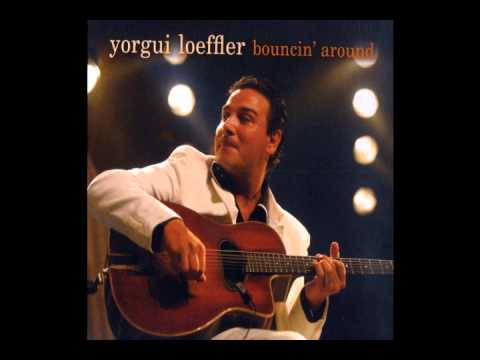
Kern and Harbach wrote this song for Roberta in 1933. The modern listening choices include Grappelli with the Diz Disley Trio and Yorgui Loeffler; the chord-melody lesson is labelled separately.

Tune details

Music: Jerome Kern

Words: Otto Harbach

Source-attributed publication / composition: 1933

Original key: Not established

Study level: Intermediate; sing the last phrase before the middle section and the first phrase after it without stopping

Melody & head

  • A lyrical standard for shaping a long melodic arc and a convincing return from contrast.
  • Do not impose one performer’s rubato on a fixed-tempo backing track without adjusting the phrasing.

Study the inherited Django recording evidence

A lyrical standard for shaping a long melodic arc and a convincing return from contrast.

Session evidence

Smoke Gets In Your Eyes,P 77334 ,Fremeaux FA 303,"April 1935 - Pierre Lord (vo),Stephane Grappelly (v), Rene Ronald (p), Django Reinhardt (g)."

Study the proposed backing arrangement ↗

Preserve the broad melody arc before embellishing it. Locate the contrasting middle section and practise its return as a separate listening exercise until its tonal shift is secure. Check the video key before playing with the chart.

Chart & Form

Preserve the broad melody arc before embellishing it. Locate the contrasting middle section and practise its return as a separate listening exercise until its tonal shift is secure.

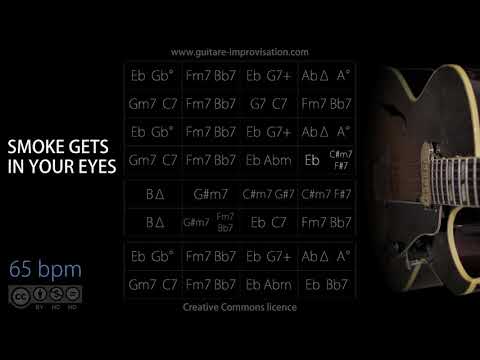
A complete chord chart has not yet been verified. The exercises are editorial listening and practice suggestions, not a replacement score.

No readable chord chart has been added for this title.

Play along

Study Django's Solo

Performed studies, transcriptions, TAB, notation and lessons for studying Django’s solo. Inclusion does not certify note-for-note accuracy.

No Django solo study aid yet. Know a useful resource — or want to record a study of this solo?

Similar tunes

Follow a shared key, a harmonic idea or a familiar form. Keys refer to this site’s chart editions; other recordings may use a different key.

Related chord movement

No sufficiently supported harmonic comparison has been added yet.

Same chart key

No match is established in the current chart metadata.

Same form

No match is established in the current chart metadata.

Behind the illustration

Original jazz serigraph illustration for smoke gets in your eyes

Original AI-assisted editorial artwork inspired by the tune’s mood. It does not depict a documented historical event.

Original AI-generated illustration for Djangopedia; not a historical photograph.

Illustration credits & provenance →

Notable Gypsy Jazz Performances

Selected performances by notable Gypsy Jazz players and ensembles. Inclusion is editorial and does not imply an objective popularity ranking.

Improvisation

Target notes & voice leading

  • Preserve the broad melody arc before embellishing it. Locate the contrasting middle section and practise its return as a separate listening exercise until its tonal shift is secure.
  • Sing the destination note before connecting it to the preceding chord.

Pitch choices

  • Begin with the named chord tones. Add passing notes only after the melody and cadence are secure.

Sing the last phrase before the middle section and the first phrase after it without stopping. Then play only their melody notes over a quiet pulse.

Comping & voicings

Use gently connected upper voices and avoid abrupt changes of register under a long melody note.

Voicing note sets

  • Use gently connected upper voices and avoid abrupt changes of register under a long melody note.

Keep the accompaniment clear

  • First establish an even pulse; add rhythmic variation only when the melody leaves space.
  • Do not impose one performer’s rubato on a fixed-tempo backing track without adjusting the phrasing.

Melody notes

Practice room

55–85 bpm

Your assignment

Sing the last phrase before the middle section and the first phrase after it without stopping. Then play only their melody notes over a quiet pulse.

Loop these changes

  • Sing the last phrase before the middle section and the first phrase after it without stopping. Then play only their melody notes over a quiet pulse.

Metronome

Count quarter notes first. Then place the click on beats 2 and 4 at half the click rate, keeping the phrase length unchanged.

Transposition

  • Move one short cadence to a nearby key by naming its chord tones, then return to the chosen study key.

At the session

Confirm the chosen arrangement key; Confirm the complete form. Agree the arrangement, pickup and ending before counting in.

Start together

  • Count a clear tempo and use the final cadence of the agreed arrangement.

Finish together

  • Cue the final tonic together; agree any tag before starting.

Do not impose one performer’s rubato on a fixed-tempo backing track without adjusting the phrasing.

  • Do not impose one performer’s rubato on a fixed-tempo backing track without adjusting the phrasing.

Arranging the tune

Solo guitar

Keep the melody uppermost and begin with a single bass note under each harmony. Use gently connected upper voices and avoid abrupt changes of register under a long melody note.

Trio or larger group

Use gently connected upper voices and avoid abrupt changes of register under a long melody note.

Vocal considerations

Choose a comfortable singing key and transpose the accompaniment as a whole; lyrics are not reproduced here.

Sources & credits

This player guide combines inherited recording evidence and editorial study notes. Musical study notes are editorial suggestions; compare them with the recording.

Djangopedia full discography ↗

Credit / historical reference ↗

  • Source-attributed credits and historical context; not an exact take mapping.

Inherited Djangopedia chart and recording evidence

  • Existing chart and discographic rows; retained as inherited evidence.
Illustration credit & provenance

Original AI-generated illustration for Djangopedia; not a historical photograph.

Original AI-assisted editorial artwork inspired by the tune’s mood. It does not depict a documented historical event.

Generated with the native image-generation tool on 2026-10-18; original editorial artwork, not a historical photograph.

Prompt: Create original horizontal 1536x1024 3:2 editorial serigraph artwork for smoke gets in your eyes. An anonymous guitarist in a small jazz club, curling abstract translucent-looking flat ink ribbons above a coffee cup. Stage 6C visual vocabulary: simplified angular silhouettes, expressive asymmetry and negative space, flat limited inks smoky blue, pale peach, charcoal, ivory, rough handmade ink edges, tactile paper grain. Mid-century jazz silk-screen print, restrained whimsy, strong graphic composition, no gradients, no photorealism, no words, no letters, no border. Original imagined scene, not a historical depiction. Heads and instruments fully inside frame.

Research & rights notes
  • Exact YouTube-to-matrix/take associations are not established. Historical rows remain inherited archive evidence.
  • No complete chart is present in the inherited archive. This is a listening-led study guide; confirm a reliable arrangement before a jam.
  • No chart key is asserted; choose and verify the key of the selected arrangement.
  • No qualifying new Django solo recreation was confirmed in this bounded search.