Tune details
Music: Django Reinhardt
Documented in archive: 1943
Original key: Not established
Study level: Intermediate; play a two-note question three times, changing only its last note to match the next verified chord
 Djangopedia
A less familiar Django-era blues for building a solo from one small, repeatable idea.
Play a two-note question three times, changing only its last note to match the next verified chord.

Owner content reviewed — 2026-10-18T23:08:27Z by admin. Coverage measures presence, not accuracy. Content review does not certify rights or musical perfection.
Django recordings for this tune. Uploader dates and take labels remain source claims; only an evidenced exact association enables a row’s Listen control.
Django Reinhardt
source-described; accuracy not independently verified
Uploader identifies this as Django Reinhardt’s performance; recording date and take require comparison with the discography.
| Entry | Year | Recording / session / release evidence | Listen |
|---|---|---|---|
| 01 | 1943 | Blues d'Autrefois, 7/7/43, OSW 358-1 ,"Fremeaux FA 312, Classics 905, Jazz Time 799991-2, HEP 1041", - Paris - Django Reinhardt et Son Orchestre | — |
A dash means no video has been associated with this exact historical recording. Tune-level listening resources remain available above.
The inherited 1943 recording is retained as the historical anchor. Parlophone credits Reinhardt, while another release adds Riesner; the composition date and that expanded credit remain unresolved.
Music: Django Reinhardt
Documented in archive: 1943
Original key: Not established
Study level: Intermediate; play a two-note question three times, changing only its last note to match the next verified chord
A less familiar Django-era blues for building a solo from one small, repeatable idea.
Blues d'Autrefois, 7/7/43, OSW 358-1 ,"Fremeaux FA 312, Classics 905, Jazz Time 799991-2, HEP 1041", - Paris - Django Reinhardt et Son Orchestre
Compare the recorded head with the proposed accompaniment before choosing a blues formula. Work with repeated rhythmic ideas and make the change of harmony audible through the phrase’s final note. Check the video key before playing with the chart.
Compare the recorded head with the proposed accompaniment before choosing a blues formula. Work with repeated rhythmic ideas and make the change of harmony audible through the phrase’s final note.
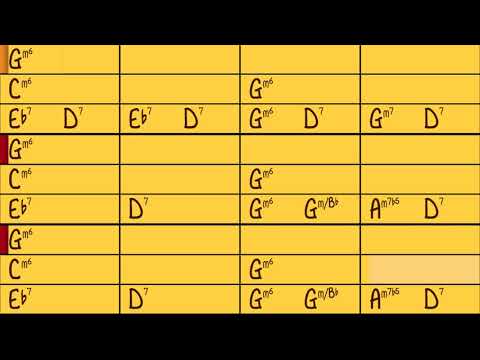
A complete chord chart has not yet been verified. The exercises are editorial listening and practice suggestions, not a replacement score.
No readable chord chart has been added for this title.
Joseph Dubreuil
2m36s · Video available when checked; creator-described attribution.
Creator-provided play-along; instrumentation and feel vary by selection. Check the key and full arrangement before joining in; the guide chart may use another key.
If playback is unavailable, use the source link.
Performed studies, transcriptions, TAB, notation and lessons for studying Django’s solo. Inclusion does not certify note-for-note accuracy.
augusto creni
source-described; accuracy not independently verified
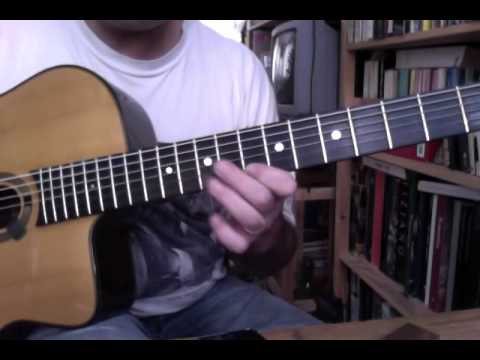
Creator presents a study of Django’s recorded solo. Use it alongside the original recording; exact transcription accuracy has not been independently reviewed.
If playback is unavailable, use the source link.
Follow a shared key, a harmonic idea or a familiar form. Keys refer to this site’s chart editions; other recordings may use a different key.
No sufficiently supported harmonic comparison has been added yet.
No match is established in the current chart metadata.
No match is established in the current chart metadata.
Original jazz serigraph illustration for blues d autrefois
Original AI-assisted editorial artwork inspired by the tune’s mood. It does not depict a documented historical event.
Original AI-generated illustration for Djangopedia; not a historical photograph.
Illustration credits & provenance →Selected performances by notable Gypsy Jazz players and ensembles. Inclusion is editorial and does not imply an objective popularity ranking.
Reveboheme
Video available when checked; creator-described attribution.
Performer attribution follows the video title and channel description. Proposed listening selection; no popularity ranking implied.
If playback is unavailable, use the source link.
 Django Reinhardt - Reve Boheme - Blues D'autrefoisRevebohemeVideo available when checked; creator-described attribution.Performer attribution follows the video title and channel description. Proposed listening selection; no popularity ranking implied.✓ Featured
 Trio Swing D'Autrefois - Blues D'Autrefois | 7th Django Reinhardt Festival DuesseldorfGuido GiottaVideo available when checked; creator-described attribution.Performer attribution follows the video title and channel description. Proposed listening selection; no popularity ranking implied.Select video
Play a two-note question three times, changing only its last note to match the next verified chord. Keep the rhythm identical on all three passes.
Use a short release and a stable pulse beneath the riff. Leave fills to the spaces between complete phrases.
80–120 bpm, then increase gradually
Play a two-note question three times, changing only its last note to match the next verified chord. Keep the rhythm identical on all three passes.
Count quarter notes first. Then place the click on beats 2 and 4 at half the click rate, keeping the phrase length unchanged.
Confirm the chosen arrangement key; Confirm the complete form. Agree the arrangement, pickup and ending before counting in.
The title alone does not establish a standard twelve-bar chord sequence.
Keep the melody uppermost and begin with a single bass note under each harmony. Use a short release and a stable pulse beneath the riff. Leave fills to the spaces between complete phrases.
Use a short release and a stable pulse beneath the riff. Leave fills to the spaces between complete phrases.
No vocal arrangement is prescribed; use the instrumental melody as the phrasing reference.
This player guide combines inherited recording evidence and editorial study notes. Musical study notes are editorial suggestions; compare them with the recording.
Credit / historical reference ↗
Inherited Djangopedia chart and recording evidence ↗
Original AI-generated illustration for Djangopedia; not a historical photograph.
Original AI-assisted editorial artwork inspired by the tune’s mood. It does not depict a documented historical event.
Generated with the native image-generation tool on 2026-10-18; original editorial artwork, not a historical photograph.
Prompt: Original horizontal 1536x1024 3:2 editorial serigraph for jazz tune blues d autrefois. An anonymous guitarist beside a vintage gramophone and a stack of unlabelled records, nostalgic cafe interior. Use Stage 6C bold simplified angular silhouettes, asymmetrical negative space, flat limited inks sepia, dark teal, ochre, cream, handmade rough ink edges and tactile paper grain. Whimsical restrained mid-century jazz screen-print design. No gradients, no photorealism, no text/letters, no border. Original imagined scene, not a historical depiction. Heads and instruments fully inside frame.