
Tune details
Music: Richard Rodgers
Words: Lorenz Hart
Source-attributed publication / composition: 1934
Original key: Not established
Study level: Early intermediate; melodic phrasing and bridge contrast
 Djangopedia
A familiar melody makes an inviting first study of turnaround phrases and a bridge that briefly changes the tonal scenery.
Sing the first A section and play only its phrase-ending notes.

Owner content reviewed — 2026-10-18T10:57:12Z by admin. Coverage measures presence, not accuracy. Content review does not certify rights or musical perfection.
Django recordings for this tune. Uploader dates and take labels remain source claims; only an evidenced exact association enables a row’s Listen control.
Django Reinhardt
source-described; accuracy not independently verified
Uploader identifies this as Django Reinhardt’s performance; recording date and take require comparison with the discography.
| Entry | Year | Recording / session / release evidence | Listen |
|---|---|---|---|
| 01 | 1935 | Blue Moon, 2/3/35, OLA 346-1 ,"Fremeaux FA 302, JSP 344, Conifer CDHD 230, EMI JazzTime 251277-2","- Paris - Coleman Hawkins (ts), Michel Warlop & Orchestra featuring Django Reinhardt (g)." | — |
A dash means no video has been associated with this exact historical recording. Tune-level listening resources remain available above.
Blue Moon is credited to Richard Rodgers and Lorenz Hart; the familiar published song dates from 1934. The inherited Django entry records a March 1935 Paris performance with Coleman Hawkins and Michel Warlop’s orchestra. Listen for the guitar’s place inside that ensemble instead of assuming a string-quintet setting. The guide uses the existing C-major grid; the proposed play-alongs include other keys and an explicitly labelled Latin alternative.
Music: Richard Rodgers
Words: Lorenz Hart
Source-attributed publication / composition: 1934
Original key: Not established
Study level: Early intermediate; melodic phrasing and bridge contrast
Compare the short guitar responses with the saxophone phrases in the inherited recording. Count the bridge separately and notice how the ensemble announces the return.
Blue Moon, 2/3/35, OLA 346-1 ,"Fremeaux FA 302, JSP 344, Conifer CDHD 230, EMI JazzTime 251277-2","- Paris - Coleman Hawkins (ts), Michel Warlop & Orchestra featuring Django Reinhardt (g)."
In the A sections, the inherited C–Am6–Dm7–G7 movement repeatedly returns to the tonic. Shape one complete melody phrase over that cycle rather than beginning a new lick with every chord. The bridge first confirms C, then uses Fm6–B-flat7 toward E-flat. Its last bars prepare G7 and the return. Hear that E-flat destination before practising a fast connection back to C. Check the video key before playing with the chart.
In the A sections, the inherited C–Am6–Dm7–G7 movement repeatedly returns to the tonic. Shape one complete melody phrase over that cycle rather than beginning a new lick with every chord. The bridge first confirms C, then uses Fm6–B-flat7 toward E-flat. Its last bars prepare G7 and the return. Hear that E-flat destination before practising a fast connection back to C.
Inherited chart is preserved verbatim as historical study material, not silently corrected or newly authenticated. Check the specific caveats below and match the arrangement and key to the selected video. External teaching material remains on its creator’s site.
| C/ Am6/ | Dm7/ G7/ | C/ Am6/ | Dm7/ G7/ | C/ Am6/ | Dm7/// | C/ F/ | C/ G7/ |

| C/ Am6/ | Dm7/ G7/ | C/ Am6/ | Dm7/ G7/ | C/ Am6/ | Dm7/// | C/ Dm7/ | C/// |

| Dm7/ G7/ | C/// | Dm7/ G7/ | C/// | Fm6/ Bb7/ | Eb/// | G/ D7/ | Dm7/ G7/ |

| C/ Am6/ | Dm7/ G7/ | C/ Am6/ | Dm7/ G7/ | C/ Am6/ | Dm7/// | C/ Dm7/ | C/// |
Original source ↗
QGVideos
Swing · 110 BPM · 3m43s · Video available when checked; creator-described attribution.
Standard jazz backing in E-flat major, 110 bpm. Transpose the inherited C-major chart before playing along.
If playback is unavailable, use the source link.
 Blue Moon - Backing track / Play-alongQGVideosSwing · 110 BPM · 3m43s · Video available when checked; creator-described attribution.Standard jazz backing in E-flat major, 110 bpm. Transpose the inherited C-major chart before playing along.✓ Featured
 Blue Moon - Latin Gypsy Jazz Backing Track in D (165 bpm)Gypsy Jazz EssentialsLatin · 165 BPM · 3m25s · Video available when checked; creator-described attribution.Latin gypsy-jazz alternative in D major, 165 bpm; both feel and key differ from the inherited C-major study grid.Select video
Performed studies, transcriptions, TAB, notation and lessons for studying Django’s solo. Inclusion does not certify note-for-note accuracy.
No Django solo study aid yet. Know a useful resource — or want to record a study of this solo?
Follow a shared key, a harmonic idea or a familiar form. Keys refer to this site’s chart editions; other recordings may use a different key.
No sufficiently supported harmonic comparison has been added yet.
Showing 8 of 30 matches. Explore the full catalogue →
Showing 8 of 85 matches. Explore the full catalogue →
Original serigraph-style illustration for blue moon
Original AI-assisted editorial artwork inspired by the tune’s mood. It does not depict a documented historical event.
Original AI-assisted illustration created for Djangopedia
Illustration credits & provenance →Selected performances by notable Gypsy Jazz players and ensembles. Inclusion is editorial and does not imply an objective popularity ranking.
Joscho Stephan
Video available when checked; creator-described attribution.
Performer attribution follows the video title and channel description. Proposed listening selection; no popularity ranking implied.
If playback is unavailable, use the source link.
 Blue Moon // Joscho Stephan Trio feat. Costel NițescuJoscho StephanVideo available when checked; creator-described attribution.Performer attribution follows the video title and channel description. Proposed listening selection; no popularity ranking implied.✓ Featured
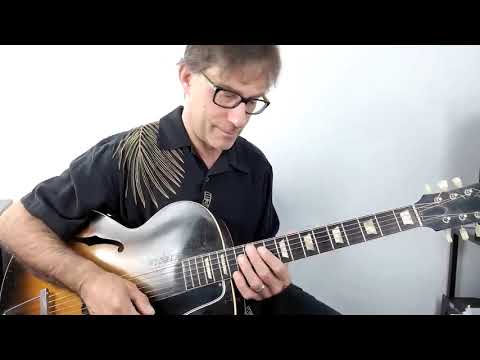 "Blue Moon" Jam with Frank VignolaFrank VignolaVideo available when checked; creator-described attribution.Performer attribution follows the video title and channel description. Proposed listening selection; no popularity ranking implied.Select video
Sing the first A section and play only its phrase-ending notes. Add a two-note answer in the spaces. Then practise the bridge alone, landing clearly in E-flat and returning to C without changing the pulse.
Keep the rhythm transparent under the sustained melody. Establish four even beats before trying a Latin accompaniment; the second proposed track changes both feel and key.
Begin at 70–90 quarter-note bpm
Sing the first A section and play only its phrase-ending notes. Add a two-note answer in the spaces. Then practise the bridge alone, landing clearly in E-flat and returning to C without changing the pulse.
Count quarter notes first. Then place the click on beats 2 and 4 at half the click rate, keeping the phrase length unchanged.
C major (inherited chart); 32-bar AABA refrain. Agree the arrangement, pickup and ending before counting in.
The QGVideos track is in E-flat; the Latin track is in D. Neither can be played directly from the C chart without transposition.
Keep the melody uppermost and begin with a single bass note under each harmony. Start with E–B for C-major colour and B–F for G7; add a bass note only when the melody remains clear.
Keep the rhythm transparent under the sustained melody. Establish four even beats before trying a Latin accompaniment; the second proposed track changes both feel and key.
Choose a comfortable singing key and transpose the accompaniment as a whole; lyrics are not reproduced here.
This player guide combines inherited recording evidence and editorial study notes. Musical study notes are editorial suggestions; compare them with the recording.
Blue Moon copyright deposit research ↗
Preserved Djangopedia archive ↗
Existing Django listening reference ↗
Original AI-assisted illustration created for Djangopedia
Original AI-assisted editorial artwork inspired by the tune’s mood. It does not depict a documented historical event.
Generated with the native image-generation tool on 2026-10-18; original editorial artwork, not a historical photograph.
Prompt: Create an original horizontal 3:2 editorial serigraph illustration for the jazz tune Blue Moon. A lone anonymous angular guitarist beneath an oversized blue crescent moon, abstract midnight rooftops and a small warm window. Mid-century jazz screen-print vocabulary: bold simplified silhouettes, asymmetrical negative space, flat limited ink palette of midnight blue, powder blue, warm ivory and one muted coral accent, slightly rough ink edges and subtle paper grain. Crisp graphic shapes, whimsical quiet mood, handmade silk-screen print appearance, no gradients, no photorealism, no letters, no words, no border. Entire composition is original and does not reproduce any existing artwork. Keep the guitar and head fully within the frame.