
Tune details
Music: Django Reinhardt
Documented in archive: 1942
Original key: Not established
Study level: Advanced bridge navigation
 Djangopedia
A cheerful, compact A section conceals a bridge with much darker and more remote colours. The contrast makes Belleville useful for studying how to preserve a melodic idea while the harmony changes character.
Hear and sing the bridge’s changing thirds.

Owner content reviewed — 2026-10-04T16:09:18Z by admin. Coverage measures presence, not accuracy. Content review does not certify rights or musical perfection.
Django recordings for this tune. Uploader dates and take labels remain source claims; only an evidenced exact association enables a row’s Listen control.
Uploader identifies this as Django Reinhardt’s performance; recording date and take require comparison with the discography.
| Entry | Year | Recording / session / release evidence | Listen |
|---|---|---|---|
| 01 | 1942 | Belleville, 31/3/42, OSW 265-1 ,"Fremeaux FA 311, Classics 877, Jazz Time 799991-2, RDC 40032, Mosaic MD6-190(6 CD Set).","Same date - Paris - QHCF - Hubert Rostaing (cl), Dajngo Reinhardt, Eugene Vees (g), Emmanuel Soudieux (b), Andre Jourdan (d)" | — |
| 02 | 1943 | Belleville, 12/3/43, OSW 330-1 ,"Fremeaux FA 312, Classics 905, Jazz Time 799991-2, HEP 1041, EMI 746 5012, EMI 780671-2", - Paris - Django Reinhardt et Son Orchestre | — |
| 03 | 1945 | Belleville, 26/10/45, "Fremeaux FA 312, Jass JCD 628, Vogue 228E 6004, Vogue 668003", - Paris - Django Reinhardt and the A.T.C. Band - AFN Brodcast | — |
| 04 | 1945 | Belleville, 8/12/45, "Fremeaux FA 312, Jass JCD 628, Vogue 228E 6005", - Paris - Django Reinhardt and the A.T.C. Band - NBC Brodcast | — |
| 05 | 1946 | Belleville, 1/2/46, DR 10027-2,"Fremeaux FA 313, Classics 945, Verve 516 931-2", - London | — |
| 06 | 1947 | Belleville, 8-13/11/47, "Fremeaux FA 315, Vogue 228E 6007, Vogue 670205, Legacy 411(""Belltown""!!)"," - Paris - Souvenirs de Django Reinhardt - Django Reinhardt (elg), Gerard Leveque (cl), Eugene Vees (g), Emmanuel Soudieux (b), Andre Jourdan (d)" | — |
| 07 | 1951 | Belleville, 1951 , 7 TLA 1586 ,"Jazz Time 789952-2, RCA 74321 237692",- Paris - Film Soundtrack - Django Reinhardt (g solo) | — |
A dash means no video has been associated with this exact historical recording. Tune-level listening resources remain available above.
The legacy page lists seven recording entries spanning 1942–1951, beginning with OSW 265-1. Several personnel settings are represented. The title refers to Belleville, but a specific story about Django’s intent is not established by those session entries.
Music: Django Reinhardt
Documented in archive: 1942
Original key: Not established
Study level: Advanced bridge navigation
Listening task: Keep the repeated A motif buoyant and separated. Count the head before comparing solo choruses.
Belleville, 31/3/42, OSW 265-1 ,"Fremeaux FA 311, Classics 877, Jazz Time 799991-2, RDC 40032, Mosaic MD6-190(6 CD Set).","Same date - Paris - QHCF - Hubert Rostaing (cl), Dajngo Reinhardt, Eugene Vees (g), Emmanuel Soudieux (b), Andre Jourdan (d)"
Compare the tempo, key, introduction and final cadence with the first entry. Hear and sing the bridge’s changing thirds.
Belleville, 1951 , 7 TLA 1586 ,"Jazz Time 789952-2, RCA 74321 237692",- Paris - Film Soundtrack - Django Reinhardt (g solo)
Count its form and check its key before joining in. D-major turnaround figures dominate the A sections. The bridge opens in G minor, returns toward D, then explores F♯-centred harmony before A7 brings back D. The old chart’s bare F♯ symbols need comparison with the chosen arrangement.
D-major turnaround figures dominate the A sections. The bridge opens in G minor, returns toward D, then explores F♯-centred harmony before A7 brings back D. The old chart’s bare F♯ symbols need comparison with the chosen arrangement.
Chord symbols follow the inherited Djangopedia chart. Slashes are rhythmic marks; chord quality and turnaround choices may differ from the backing track. This is a chord reference, not a melody transcription.
[[Image:Belleville.gif]]


| D/ F0/ | Em/ A7/ | D/ F0/ | Em/ A7/ | D/ F0/ | Em/ A7/ | D/// | D/// |

| D/ F0/ | Em/ A7/ | D/ F0/ | Em/ A7/ | D/ F#/ | G/ G#m/ | A7/// | D/// |

| Gm/// | Gm/// | D/// | /// | F#/// | G0/// | G#m/ C#7/ | F#/ A7/ |

| D/ F0/ | Em/ A7/ | D/ F0/ | Em/ A7/ | D/ F0/ | Em/ A7/ | D/// | D/// :||
Original source ↗
Gonzalo Bergara · 2:32
Checked 2026-09-20
Highest displayed view count among matching backing-track videos returned by relevance and view-count YouTube searches. Not a complete platform-wide ranking.
Guitare Improvisation · 4:58
Guitare Improvisation · 5:26
Performed studies, transcriptions, TAB, notation and lessons for studying Django’s solo. Resources are described by their creator; inclusion does not certify note-for-note accuracy.
DjangoKOR · source-described; accuracy not independently verified
Creator presents a study of Django’s recorded solo. Use it alongside the original recording; exact transcription accuracy has not been independently reviewed.
Checked 2026-10-02
Follow a shared key, a harmonic idea or a familiar form. Keys refer to this site’s chart editions; other recordings may use a different key.
Showing 8 of 42 matches. Explore the full catalogue →
Chosen as a view of Django from 1944, to place the study beside his changing performing life. The closest dated recording entry here is 1943. This is an editorial pairing; the photograph is not claimed to depict a performance or session of this tune.
A formal Studio Harcourt portrait. The credited studio and year come from the linked file record. The portrait is not a recording-session photograph.
Explore this photograph, its context & credits →Selected performances by notable Gypsy Jazz players and ensembles. Inclusion is editorial and does not imply an objective popularity ranking.
Biréli Lagrène Gipsy Project · Biréli Lagrène
2001 · Gipsy Project — artist release
Gipsy Project ensemble recording with Hono Winterstein, Diego Imbert, Florin Niculescu and Holzmano Lagrène; year denotes the release.
If playback is unavailable, use the source link.
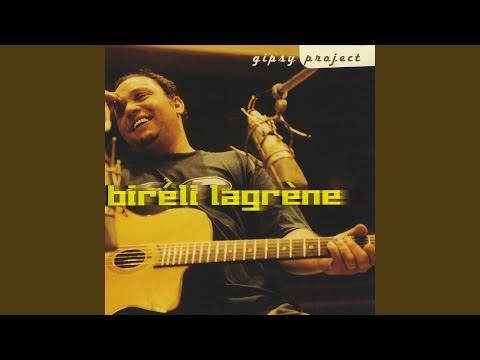 BellevilleBiréli Lagrène Gipsy Project · Biréli Lagrène2001 · Gipsy Project — artist releaseGipsy Project ensemble recording with Hono Winterstein, Diego Imbert, Florin Niculescu and Holzmano Lagrène; year denotes the release.✓ Featured
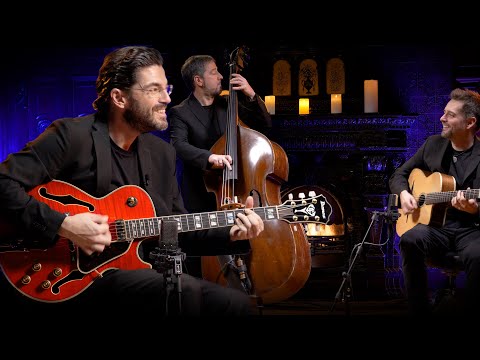 Belleville | Joscho Stephan Trio | Django Reinhardt Jazz ClassicJoscho Stephan, Sven Jungbeck and Volker Kamp · Joscho StephanGypsy jazz trioShort complete theme–solo–theme trio performance. A teaching advertisement follows at 2:10; the musical performance itself is not a lesson.Select performance
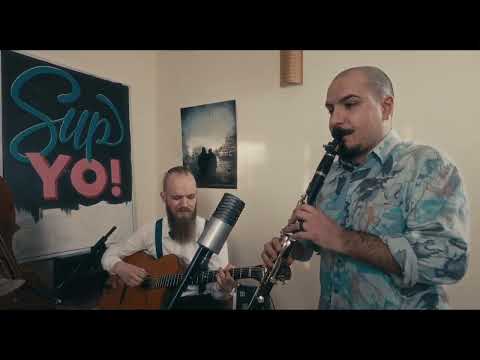 Django Reinhardt Belleville - Hot Club du NaxHot Club du NaxHot Club ensembleLiving-room ensemble performance of Django’s composition, published by the band.Select performance
 Belleville - Hot Cafe - Gypsy Jazz at the Wellington Jazz Club (NZ)Hot Café · Nick GranvilleWellington Jazz Club, New ZealandNew Zealand Gypsy jazz ensemble with Leigh Jackson, Nick Granville, Nick Tipping and Nik Brown.Select performance
Make a bridge-only loop and play roots followed by thirds. Then carry a short rhythmic cell through the whole bridge while changing only its pitch content.
Play the repeated A-section pattern with consistent dynamics. Reduce density on the bridge so the harmonic changes remain intelligible.
Start at 110–130; build toward 180–220 bpm
Make a bridge-only loop and play roots followed by thirds. Then carry a short rhythmic cell through the whole bridge while changing only its pitch content.
Start below the suggested tempo. First hear four quarter-note clicks, then halve the click rate and place clicks on beats 2 and 4. Keep the same phrase length.
Belleville — D major; 32 bars, AABA. Agree the tempo, pickup, solo order and ending before the count.
Agree on bridge chord qualities and substitutions before starting; this is a chart-comparison tune.
A sparse bridge with melody and bass is clearer than attempting every passing chord in a thick chord-melody texture.
Agree on bridge chord qualities and substitutions before starting; this is a chart-comparison tune.
This guide studies an instrumental arrangement. Any later lyric adaptation requires its own credit and chosen key.
This player guide combines inherited recording evidence and editorial study notes. Musical study notes are editorial suggestions; compare them with the recording.
Gonzalo Bergara — backing track ↗
Feature photograph — Studio Harcourt / Wikimedia Commons ↗
Studio Harcourt / Wikimedia Commons · France · 1944
Public domain in France (PD-France), per Commons
Photograph source ↗ · Rights details ↗Used to illustrate Django’s life; no connection to this tune’s recording session is claimed.
Photograph rights are documented separately in its credit. They do not establish the rights status of the composition or recording.