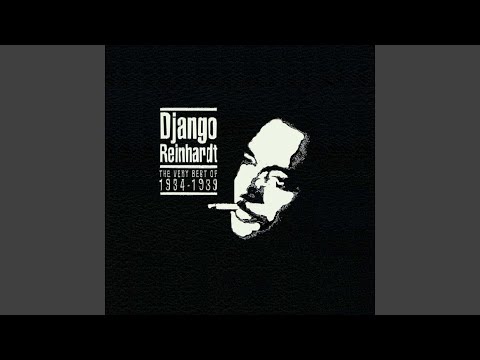
Tune details
Music: Doc Daugherty, Ellis Reynolds
Words: Al Neiburg
Published / composed / adapted — see history: 1930
Original key: Not established
Study level: Intermediate; advanced where the inherited roadmap needs reconstruction
 Djangopedia
A relaxed song with more harmonic detail than its easy surface suggests. Augmented colour and passing dominants reward smooth voice leading and a vocal sense of time.
Resolve the augmented fifth gently into the tonic’s third.

Owner content reviewed — 2026-10-04T17:06:53Z by admin. Coverage measures presence, not accuracy. Content review does not certify rights or musical perfection.
Django recordings for this tune. Uploader dates and take labels remain source claims; only an evidenced exact association enables a row’s Listen control.
Uploader identifies this as Django Reinhardt’s performance; recording date and take require comparison with the discography.
| Entry | Year | Recording / session / release evidence | Listen |
|---|---|---|---|
| 01 | 1934 | Confessin', Aug. 1934, "Fremeaux FA 302, Classics 703."," - Paris - Django Reinhardt, Joseph Reinhardt (g), Juan Fernandez (b)." | — |
| 02 | 1934 | Confessin', Sept. 1934, 1072,"Fremeaux FA 302, Classics 703, JSP 341, SW 8419."," - Paris - Delauney's Jazz:Stephane Grappelly (v), Django Reinhardt (g),Joseph Reinhardt, Roger Chaput (g), Louis Vola (b),Bert Marshall (vo)." | — |
| 03 | 1935 | Confessin', March 1935, P 77242 ,"Fremeaux FA 303, JSP 341, Classics 727"," - Paris - QHCF: Stephane Grappelly (v), Django Reinhardt (g),RogerChaput, Joseph Reinhardt (g),Louis Vola (b),Jerry Mengo (vo)." | — |
| 04 | 1947 | Confessin', 10/12/47, ST 2221-3 ,"Fremeaux FA 316, Verve 835 418-2"," - Paris - Rex Stewart (tpt), Hubert Rostaing (as), Django Reinhardt (g) Ladislas Czabanyck (b), Ted Curry (d)" | — |
| 05 | 1953 | Confessin', 10/3/53, Verve 835418-2," - Paris - Django Reinhardt (elg), Maurice Vander (p), Pierre Michelot(b), Jean-Louis Viale (d)" | — |
A dash means no video has been associated with this exact historical recording. Tune-level listening resources remain available above.
Confessin' is credited here to Doc Daugherty, Ellis Reynolds. The source date is 1930; publication, composition and later lyric adaptations may have separate dates. The inherited archive lists 5 recording entries, with dated entries spanning 1934–1953. These are archive rows, not a claim that every entry is a distinct released take. The old introduction says August 1935, but its recording rows include August and September 1934. That discrepancy is retained rather than resolved by assumption.
Music: Doc Daugherty, Ellis Reynolds
Words: Al Neiburg
Published / composed / adapted — see history: 1930
Original key: Not established
Study level: Intermediate; advanced where the inherited roadmap needs reconstruction
Listening task: Use the lyric’s conversational shape as a model for instrumental breathing. Mark the key, pickup, phrase lengths and ending before comparing another version.
Confessin', Aug. 1934, "Fremeaux FA 302, Classics 703."," - Paris - Django Reinhardt, Joseph Reinhardt (g), Juan Fernandez (b)."
Compare the first and last listed entries for tempo, instrumentation and arrangement. Do not infer identical takes from a shared title. Resolve the augmented fifth gently into the tonic’s third.
Confessin', 10/3/53, Verve 835418-2," - Paris - Django Reinhardt (elg), Maurice Vander (p), Pierre Michelot(b), Jean-Louis Viale (d)"
The inherited chart is in G major. Confirm the backing track’s sounding key, pickup and complete form before playing; an instrument label may describe a transposed score.
G alternates with D augmented before a route through E7 and A7. The bridge settles on C after G7, then uses A7–D7 to prepare the return.
Chord symbols and source cell divisions are preserved from Djangopedia. Slashes mark rhythm; 0 is inherited diminished notation whose exact voicing should be checked against the melody. This is a chord reference, not a melody transcription.
[[Image:Confessin.gif]]


| G/ D+/ | G/ D+/ | G/ D7 D#7 | E7/// | A7/// | A0/ D7/ | G/ G#0/ | Am7/ D7/ |

| G/ D+/ | G/ D+/ | G/ D7 D#7 | E7/// | A7/// | A0/ D7/ | G/ D7/ | Am7/ D7/ |

| G7/// | G7/// | C/// | C/// | A7/// | A7/// | D7/ Db7/ | D7/// |

| G/ D+/ | G/ D+/ | G/ D7 D#7 | E7/// | A7/// | A0/ D7/ | G/ G#0/ | Am7/ D7/ :||
Original source ↗
Clément Reboul · The inherited chart is in G major. Confirm the backing track’s sounding key, pickup and complete form before playing; an instrument label may describe a transposed score. · 6:48
Checked 2026-10-01
Most-viewed suitable match selected from the captured search results after title/composition review; not a complete YouTube ranking. Source counts were captured on 1 October 2026. Coaching, unrelated songs and non-backing performances are excluded.
Performed studies, transcriptions, TAB, notation and lessons for studying Django’s solo. Resources are described by their creator; inclusion does not certify note-for-note accuracy.
Guitareal Jazz Transcriptions · Owner-selected media; guide content review is a separate decision. Video title and channel inspected 2026-10-04.
Owner-selected Django solo study during Stage 4F. Exact recording take and transcription accuracy have not been independently established.
Follow a shared key, a harmonic idea or a familiar form. Keys refer to this site’s chart editions; other recordings may use a different key.
No sufficiently supported harmonic comparison has been added yet.
Showing 8 of 23 matches. Explore the full catalogue →
Showing 8 of 42 matches. Explore the full catalogue →
An unsealed plain envelope, an oval guitar pick and one open guitar case edge, a gently bending shadow linking them. Quiet hesitant curves suggest the relaxed confession and a passing augmented colour resolving gently; no message is legible.
An original editorial interpretation of the tune. This is an illustration, not an archival photograph or a documented reconstruction of a recording session.
Original Djangopedia illustration · AI-assisted, 2026
Illustration credits & provenance →Selected performances by notable Gypsy Jazz players and ensembles. Inclusion is editorial and does not imply an objective popularity ranking.
Angelo Debarre, Dave Kelbie and Andy Crowdy · Dave Kelbie
2022 · Shrewsbury Gypsy Jazz Festival
Trio concert performance recorded in October 2022, documented by Dave Kelbie.
If playback is unavailable, use the source link.
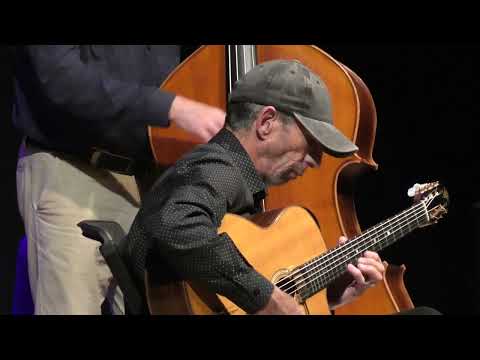 I'm Confessin' that I love you by the Angelo Debarre TrioAngelo Debarre, Dave Kelbie and Andy Crowdy · Dave Kelbie2022 · Shrewsbury Gypsy Jazz FestivalTrio concert performance recorded in October 2022, documented by Dave Kelbie.✓ Featured
 Tcha Limberger, Eva Slongo & Jimmy Grant- I'm Confessin (Django Reinhardt Style)Tcha Limberger, Eva Slongo and Jimmy Grant · Jimmy Grant και Eva SlongoDjango-style acoustic collaborationEnsemble interpretation of the standard, published by Jimmy Grant; promotional teaching links are separate from the performance.Select performance
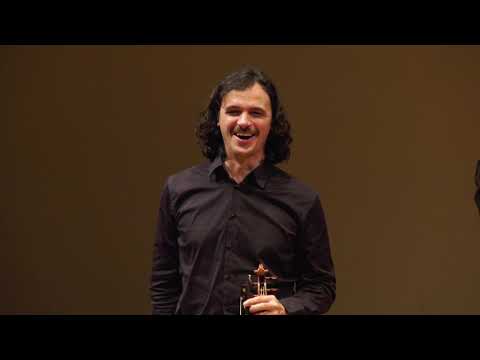 2019 Taipei Gypsy Jazz Festival - I'M CONFESSIN' THAT I LOVE YOUTcha Limberger, Sébastien Giniaux, Christiaan van Hemert, Denis Chang and Kumiko Imakyurei · Wei-Sun Arts2019 · Taipei Gypsy Jazz FestivalFestival performance combining voice, violins, guitars and double bass.Select performance
 I'm Confessin that I Love You - Yaakov Hoter TrioYaakov Hoter, Omer Ashano and Aner Albukrek · Gypsy & Jazz Academy2023 · Hadar Winery — liveLive trio performance dated 8 June 2023 by the source; the academy’s course links are separate.Select performance
 Fanou Torracinta - I'm confessin' that I love youFanou Torracinta, Bastien Brison, Benji Winterstein and William Brunard · Fanou Torracinta Musique2022 · Gipsy Guitar from Corsica Vol. 2Artist performance recorded at Sextan, Paris, in May 2022 and issued in 2023, as identified by the artist.Select performance
Play the opening on three strings with the top note A♯–B. Next sing the third of each dominant without the instrument and check those notes against the chart.
Keep the augmented chord light and connected to the tonic. Leave room after the melody’s statements rather than accenting every passing dominant.
Start around 100–140 bpm; increase only after the form stays secure
Play the opening on three strings with the top note A♯–B. Next sing the third of each dominant without the instrument and check those notes against the chart.
Begin with four quarter-note clicks. Halve the click rate and hear beats 2 and 4 while maintaining the same phrase lengths.
Confessin' — G major; 32 bars, AABA in the inherited chart. Agree the pickup, tempo and ending before counting in.
32 bars, AABA in the inherited chart. Keep the head and solo chorus lengths explicit at the count-in.
Start with melody and bass only. Add the following colour without interrupting the melody: Let the A♯ of D augmented resolve to B over G.
Keep the augmented chord light and connected to the tonic. Leave room after the melody’s statements rather than accenting every passing dominant. Agree the full roadmap and signal the last head before it starts.
Choose a comfortable vocal key and transpose the whole arrangement, including its introduction and ending.
This player guide combines inherited recording evidence and editorial study notes. Musical study notes are editorial suggestions; compare them with the recording.
Djangopedia — inherited chart and recording rows ↗
Composition credits and background ↗
Clément Reboul — practice backing ↗
Feature photograph — source collection ↗
Original Djangopedia illustration · AI-assisted, 2026
An original editorial interpretation of the tune. This is an illustration, not an archival photograph or a documented reconstruction of a recording session.
Generated with the native image-generation tool on 2026-10-08; original editorial artwork, not a historical photograph.
Prompt: Use case: illustration-story. One original editorial feature illustration for Djangopedia's guide “Confessin'”. Landscape 1536 × 1024, opaque background. Scene: An unsealed plain envelope, an oval guitar pick and one open guitar case edge, a gently bending shadow linking them. Quiet hesitant curves suggest the relaxed confession and a passing augmented colour resolving gently; no message is legible. Musical basis from the guide: A relaxed song with more harmonic detail than its easy surface suggests. Augmented colour and passing dominants reward smooth voice leading and a vocal sense of time. The supplied chart is G major; form: 32 bars, AABA in the inherited chart; feel: Swing. These describe musical inspiration, not visible writing. Historical context: Confessin' is credited here to Doc Daugherty, Ellis Reynolds. The source date is 1930; publication, composition and later lyric adaptations may have separate dates. Do not illustrate disputed historical claims or suggest this imagined scene is an archival session. Medium: drypoint. Dominant palette: black white and muted rose. Composition: intimate tabletop still life. Human presence: none. Strong intentional design, clearly drawn/painted, distinctive material marks; keep essential subject safely within the central 70 percent width and middle 80 percent height for card crops. Maintain enough visual substance at thumbnail size. Broad inspiration observed in old photo, ONLY scale/rhythm and never a reference image: single dark figure; large guitar across lower area; intimate contrast. Independently invent every pose, perspective, clothing, setting and lighting. Avoid: No face or recreation of guitarist's pose, no letter text. No photorealism, archival simulation, generated text, letters, numbers, labels, fake musical notation, logo, signature, watermark, fake dates, yellowed-paper patina, recognizable artwork or copied photograph. No imitation of any named artist. Render the art edge to edge without borders, mockup or typography.
Photograph provenance and rights are stated separately. Attribution does not establish permission.