Djangopedia
← Explore the tunes
Player guide

Anniversary Song

A minor-key song adapted from a waltz melody, heard here through a swing-oriented reference chart. Long dominant and tonic areas make phrase shape and repeated-section cues especially important.

If you study one thing

Keep the long minor phrases connected.

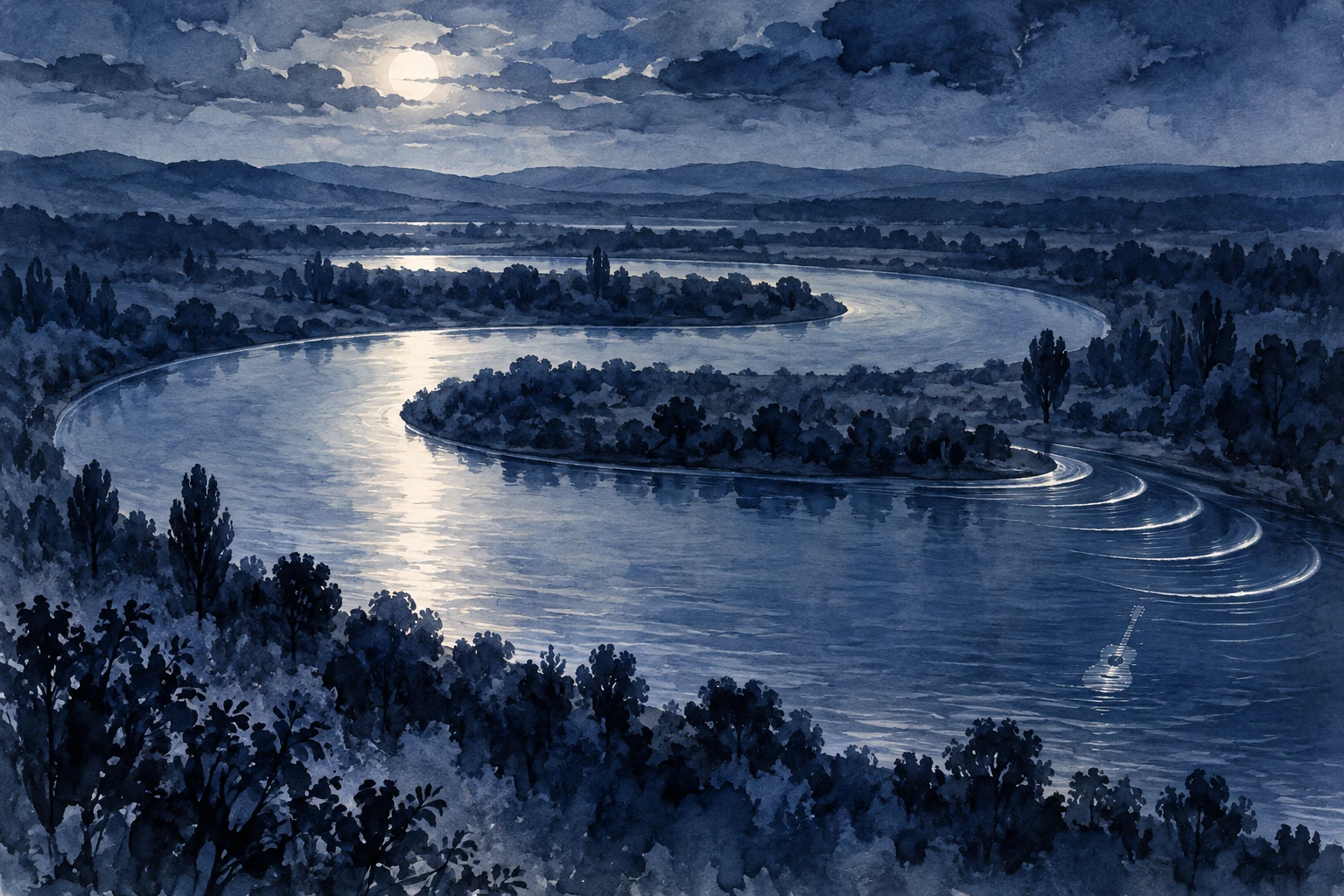
Original editorial illustration for Anniversary Song: meandering horizontal river.
Original Djangopedia illustration · AI-assisted, 2026
Illustration credits
Chart keyA minor / C major
Form64 printed cells with repeated 16-cell blocks; agree performed repeats
FeelSwing
Meter4/4
MusicIon Ivanovici, Al Jolson and Saul Chaplin (adaptation)
Guide coverage12 / 12 sections present

Owner content reviewed — 2026-10-04T09:59:35Z by admin. Coverage measures presence, not accuracy. Content review does not certify rights or musical perfection.

See what is here and what is missing
  • ✓ Recording evidence
  • ✓ Key & form
  • ✓ Chart
  • ✓ History
  • ✓ Playing notes
  • ✓ Practice plan
  • ✓ Backing track
  • ✓ Django recording
  • ✓ Django solo study aid
  • ✓ Illustration
  • ✓ Sources
  • ✓ Difficulty

Django's Recordings

Django recordings for this tune. Uploader dates and take labels remain source claims; only an evidenced exact association enables a row’s Listen control.

2 historical recording entries · source text preserved
EntryYearRecording / session / release evidenceListen
011947Anniversary Song, 6/7/47, ST 2091-1 ,"Fremeaux FA 314, Classics 1001,Verve 835 418-1,Verve 516 931-2"," - Paris - QHCF - Django Reinhardt (elg), Hubert Rostaing (cl), Joseph Reinhardt (g), Ladislas Czabanyck (b), Andre Jourdan"—
021950Anniversary Song, 1950, CW1,"Fremeaux FA 318, RCA ND 70929-2"," - Rome - Django Reinhardt (elg), Andre Ekyan (as,cl), Ralph Schecroun (p) Alf Masselier (b), Roger Paraboschi (d)"—

A dash means no video has been associated with this exact historical recording. Tune-level listening resources remain available above.

History & Listening

Anniversary Song is credited here to Ion Ivanovici, Al Jolson and Saul Chaplin (adaptation). The source date is 1946; publication, composition and later lyric adaptations may have separate dates. The inherited archive lists 2 recording entries, with dated entries spanning 1947–1950. These are archive rows, not a claim that every entry is a distinct released take. The 1946 Anniversary Song adaptation by Al Jolson and Saul Chaplin draws on Ion Ivanovici’s 1880 Waves of the Danube. Those dates refer to different stages of the piece’s history.

Tune details

Music: Ion Ivanovici, Al Jolson and Saul Chaplin (adaptation)

Words: Al Jolson, Saul Chaplin

Published / composed / adapted — see history: 1946

Original key: Not established

Study level: Intermediate; advanced where the inherited roadmap needs reconstruction

Melody & head

  • Preserve the long arcs inherited from the waltz melody even when the accompaniment swings.

Study a documented Django entry ↗

Listening task: Preserve the long arcs inherited from the waltz melody even when the accompaniment swings. Mark the key, pickup, phrase lengths and ending before comparing another version.

Session evidence

Anniversary Song, 6/7/47, ST 2091-1 ,"Fremeaux FA 314, Classics 1001,Verve 835 418-1,Verve 516 931-2"," - Paris - QHCF - Django Reinhardt (elg), Hubert Rostaing (cl), Joseph Reinhardt (g), Ladislas Czabanyck (b), Andre Jourdan"

Compare another archive entry ↗

Compare the first and last listed entries for tempo, instrumentation and arrangement. Do not infer identical takes from a shared title. Keep the long minor phrases connected.

Session evidence

Anniversary Song, 1950, CW1,"Fremeaux FA 318, RCA ND 70929-2"," - Rome - Django Reinhardt (elg), Andre Ekyan (as,cl), Ralph Schecroun (p) Alf Masselier (b), Roger Paraboschi (d)"

Check the practice arrangement ↗

The inherited chart is in A minor / C major. Confirm the backing track’s sounding key, pickup and complete form before playing; an instrument label may describe a transposed score.

Chart & Form

E7 leads to Am; Dm supplies the minor subdominant. G7–C offers relative-major contrast before E7 returns to A minor. F7 is a chromatic approach to E7 near the ending.

Chord symbols and source cell divisions are preserved from Djangopedia. Slashes mark rhythm; 0 is inherited diminished notation whose exact voicing should be checked against the melody. This is a chord reference, not a melody transcription.

Inherited chord reference · source cells
1E7
2E7
3E7
4E7
5Am
6Am
7Am
8Am
9Dm
10Dm
11Am
12Am
13E7
14E7
15Am
16Am
17E7
18E7
19E7
20E7
21Am
22Am
23Am
24Am
25Dm
26Dm
27Am
28Am
29E7
30E7
31Am
32Am
33G7
34G7
35C
36C
37E7
38E7
39Am
40Am
41Dm
42Dm
43Am
44Am
45F7
46E7
47Am
48Am
49G7
50G7
51C
52C
53E7
54E7
55Am
56Am
57Dm
58Dm
59Am
60Am
61F7
62E7
63Am
64Am
Original chart text & notation
[[Image:Anniversary_song.gif]]

| E7/// | E7/// | E7/// | E7/// | Am/// | Am/// | Am/// | Am/// | 

| Dm/// | Dm/// | Am/// | Am/// | E7/// | E7/// | Am/// | Am/// |

| E7/// | E7/// | E7/// | E7/// | Am/// | Am/// | Am/// | Am/// | 

| Dm/// | Dm/// | Am/// | Am/// | E7/// | E7/// | Am/// | Am/// |


| G7/// | G7/// | C/// | C/// | E7/// | E7/// | Am/// | Am/// | 

| Dm/// | Dm/// | Am/// | Am/// | F7/// | E7/// | Am/// | Am/// |

| G7/// | G7/// | C/// | C/// | E7/// | E7/// | Am/// | Am/// | 

| Dm/// | Dm/// | Am/// | Am/// | F7/// | E7/// | Am/// | Am/// |
Original source ↗

Play along

Preferred: Gypsy Jazz Play Along - Anniversary Song ↗

Gonzalo Bergara · The inherited chart is in A minor / C major. Confirm the backing track’s sounding key, pickup and complete form before playing; an instrument label may describe a transposed score. · 4:08

Checked 2026-10-01

How this resource was selected

Most-viewed suitable match selected from the captured search results after title/composition review; not a complete YouTube ranking. Source counts were captured on 1 October 2026. Coaching, unrelated songs and non-backing performances are excluded.

Study Django's Solo

Performed studies, transcriptions, TAB, notation and lessons for studying Django’s solo. Resources are described by their creator; inclusion does not certify note-for-note accuracy.

Similar tunes

Follow a shared key, a harmonic idea or a familiar form. Keys refer to this site’s chart editions; other recordings may use a different key.

Related chord movement

No sufficiently supported harmonic comparison has been added yet.

Same form

No match is established in the current chart metadata.

Behind the illustration

An imagined river folds into two broad slow loops, then four ripples travelling evenly along its bank, with a very small guitar-shaped reflection. Waves refer to the Danube-derived melody; ripples translate the waltz inheritance into swing. This is metaphor, not an illustration of a documented trip.

An original editorial interpretation of the tune. This is an illustration, not an archival photograph or a documented reconstruction of a recording session.

Original Djangopedia illustration · AI-assisted, 2026

Illustration credits & provenance →

Notable Gypsy Jazz Performances

Selected performances by notable Gypsy Jazz players and ensembles. Inclusion is editorial and does not imply an objective popularity ranking.

Improvisation

Target notes & voice leading

  • Resolve G♯ on E7 into A.
  • Let A on F7 descend to G♯ on E7.

Pitch choices

  • Start with the chord tones of each written harmony. Resolve G♯ on E7 into A.
  • Use passing notes only after the destination chord and phrase length are secure; this guide does not assign one scale indiscriminately to the whole tune.

Play the E7-to-Am arrival with four different rhythms but the same two notes G♯–A. Then rehearse the G7–C contrast and final F7–E7 approach.

Comping & voicings

Choose the swing arrangement explicitly rather than borrowing the original waltz pulse. Keep long Am passages buoyant and leave room for the tune’s sustained notes.

Voicing note sets

  • Am6: A–C–F♯; Dm6: D–F–B; E7: E–G♯–D.

Keep the accompaniment clear

  • Keep a quiet, even swing pulse, adjusting its density to the melody and ensemble.
  • Practise one chorus with only two chord attacks per bar, then restore four without changing tempo.
  • Confusing the original waltz source with the metre and repeats of the chosen jazz arrangement.
  • Crowding the melody with dense extensions or doubling another accompanist’s register.

Practice room

Start around 100–140 bpm; increase only after the form stays secure

Your assignment

Play the E7-to-Am arrival with four different rhythms but the same two notes G♯–A. Then rehearse the G7–C contrast and final F7–E7 approach.

Loop these changes

  • Resolve G♯ on E7 into A.
  • Let A on F7 descend to G♯ on E7.

Metronome

Begin with four quarter-note clicks. Halve the click rate and hear beats 2 and 4 while maintaining the same phrase lengths.

Transposition

  • Transpose the first complete phrase up a whole step, including its cadence. Name chord functions before finding new fingerings.
  • Return to A minor / C major and play the melodic phrase from memory.

At the session

Anniversary Song — A minor / C major; 64 printed cells with repeated 16-cell blocks; agree performed repeats. Agree the pickup, tempo and ending before counting in.

Start together

  • Suggested rehearsal entry: give two clear bars of count-in and start the agreed pickup or first melody note. This is not claimed as a historical Django introduction.

Finish together

  • Agree a final melody statement and hold its tonic arrival; remove any turnaround intended to restart the chorus. Check the chosen arrangement for tags or a separate coda.

64 printed cells with repeated 16-cell blocks; agree performed repeats. Keep the head and solo chorus lengths explicit at the count-in.

  • Confusing the original waltz source with the metre and repeats of the chosen jazz arrangement.

Arranging the tune

Solo guitar

Start with melody and bass only. Add the following colour without interrupting the melody: Resolve G♯ on E7 into A.

Trio or larger group

Choose the swing arrangement explicitly rather than borrowing the original waltz pulse. Keep long Am passages buoyant and leave room for the tune’s sustained notes. Agree the full roadmap and signal the last head before it starts.

Vocal considerations

Choose a comfortable vocal key and transpose the whole arrangement, including its introduction and ending.

Further study

  • Compare the melody’s shape in triple metre with an agreed four-beat version. Do not assume that changing metre leaves every phrase duration unchanged.
  • Chord symbols and source cell divisions are preserved from Djangopedia. Slashes mark rhythm; 0 is inherited diminished notation whose exact voicing should be checked against the melody. This is a chord reference, not a melody transcription.
  • Compare the linked archive entries before attributing one arrangement to all Django performances. The 1946 Anniversary Song adaptation by Al Jolson and Saul Chaplin draws on Ion Ivanovici’s 1880 Waves of the Danube. Those dates refer to different stages of the piece’s history.

Explore related tunes

Inherited media links

Sources & credits

This player guide combines inherited recording evidence and editorial study notes. Musical study notes are editorial suggestions; compare them with the recording.

Djangopedia — inherited chart and recording rows ↗

  • Inherited notation and discographical claims; not independent verification

Composition credits and background ↗

  • Writer credits and source date where supplied

Gonzalo Bergara — practice backing ↗

  • Video identity, view-count snapshot and embed metadata

Feature photograph — source collection ↗

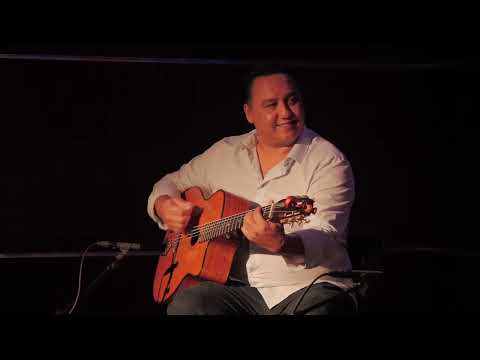
  • Photo identification and provenance; reuse rights remain unverified
Illustration credit & provenance

Original Djangopedia illustration · AI-assisted, 2026

An original editorial interpretation of the tune. This is an illustration, not an archival photograph or a documented reconstruction of a recording session.

Generated with the native image-generation tool on 2026-10-08; original editorial artwork, not a historical photograph.

Prompt: Use case: illustration-story. One original editorial feature illustration for Djangopedia's guide “Anniversary Song”. Landscape 1536 × 1024, opaque background. Scene: An imagined river folds into two broad slow loops, then four ripples travelling evenly along its bank, with a very small guitar-shaped reflection. Waves refer to the Danube-derived melody; ripples translate the waltz inheritance into swing. This is metaphor, not an illustration of a documented trip. Musical basis from the guide: A minor-key song adapted from a waltz melody, heard here through a swing-oriented reference chart. Long dominant and tonic areas make phrase shape and repeated-section cues especially important. The supplied chart is A minor / C major; form: 64 printed cells with repeated 16-cell blocks; agree performed repeats; feel: Swing. These describe musical inspiration, not visible writing. Historical context: Anniversary Song is credited here to Ion Ivanovici, Al Jolson and Saul Chaplin (adaptation). The source date is 1946; publication, composition and later lyric adaptations may have separate dates. Do not illustrate disputed historical claims or suggest this imagined scene is an archival session. Medium: ink wash. Dominant palette: indigo and silver. Composition: meandering horizontal river. Human presence: none. Strong intentional design, clearly drawn/painted, distinctive material marks; keep essential subject safely within the central 70 percent width and middle 80 percent height for card crops. Maintain enough visual substance at thumbnail size. Broad inspiration observed in old photo, ONLY scale/rhythm and never a reference image: close lone figure; compact vertical mass; muted contrast. Independently invent every pose, perspective, clothing, setting and lighting. Avoid: No boy portrait, hat, sepia or riverfront landmarks. No photorealism, archival simulation, generated text, letters, numbers, labels, fake musical notation, logo, signature, watermark, fake dates, yellowed-paper patina, recognizable artwork or copied photograph. No imitation of any named artist. Render the art edge to edge without borders, mockup or typography.

Research & rights notes
  • Specialist review of original editorial playing advice
  • Original key and precise composition date where not independently established
  • Inherited notation, session details and arrangement variants
  • Photograph reuse permissions

Photograph provenance and rights are stated separately. Attribution does not establish permission.