
Tune details
Music: Ernie Burnett
Words: George A. Norton
Published / composed / adapted — see history: 1912
Original key: Not established
Study level: Intermediate; advanced where the inherited roadmap needs reconstruction
 Djangopedia
A lyrical standard with secondary dominants and a chromatic descent. The expressive task is to keep a singing line above the changes rather than make the harmony sound busy.
Hear every F-minor/F7 change.

Owner content reviewed — 2026-10-06T15:51:33Z by admin. Coverage measures presence, not accuracy. Content review does not certify rights or musical perfection.
Django recordings for this tune. Uploader dates and take labels remain source claims; only an evidenced exact association enables a row’s Listen control.
Uploader identifies this as Django Reinhardt’s performance; recording date and take require comparison with the discography.
| Entry | Year | Recording / session / release evidence | Listen |
|---|---|---|---|
| 01 | 1938 | My Melancholy Baby, 31/5/38, CL 6718-1 ,"Fremeaux FA 308, Classics 777"," - Paris - Larry Adler (har), Stephane Grappelly (p), Django Reinhardt (g),Joseph Reinhardt, Eugene Vees (g), Roger Grasset (b)" | — |
| 02 | 1939 | My Melancholy Baby, 21/3/39, 4973-HPP ,"Fremeaux FA 308, JSP 343, Classics 793, Jazz Archives 157222, Music Memoria 87949, Gitanes 159 854-2"," - Paris - QHCF - Stephane Grappelly (g), Django Reinhardt, Joseph Reinhardt,Pierre Ferret (g), Emmanuel Soudieux (b)" | — |
| 03 | 1939 | My Melancholy Baby, 17/5/39, 5080-HPP,"Fremeaux FA 309, Classics 813, JSP 343, Music Memoria 87949, Rhapsody RHCD6"," - QHCF - Stephane Grappelly (v), Django Reinhardt, Joseph Reinhardt,Pierre Ferret (g),Emmanuel Soudieux (b)" | — |
| 04 | 1940 | My Melancholy Baby, 15/2/40, OSW 95-1 ,"Fremeaux FA 309, EMI 780671-2"," - Paris - Arthur Briggs (tpt), Christian Wagner (cl), Alix Combelle (as,ts), Ray Stokes (p), Django Reinhardt (g)" | — |
| 05 | 1949 | My Melancholy Baby, Jan-Feb 1949, CW 61,"Fremeaux FA 317, Jazz Time 827447-2"," - Rome - Django Reinhardt (g), Stephane Grappelly (v),Gianni Safred (p), Carlo Pecori (b), Aurelio de Carolis (d)." | — |
A dash means no video has been associated with this exact historical recording. Tune-level listening resources remain available above.
My Melancholy Baby is credited here to Ernie Burnett. The source date is 1912; publication, composition and later lyric adaptations may have separate dates. The inherited archive lists 5 recording entries, with dated entries spanning 1938–1949. These are archive rows, not a claim that every entry is a distinct released take. The linked recording rows preserve the original discographical wording. Compare their dates, matrices and personnel when choosing a performance to study.
Music: Ernie Burnett
Words: George A. Norton
Published / composed / adapted — see history: 1912
Original key: Not established
Study level: Intermediate; advanced where the inherited roadmap needs reconstruction
Listening task: Let sustained notes continue over passing harmonies; avoid adding a new accent at every chord symbol. Mark the key, pickup, phrase lengths and ending before comparing another version.
My Melancholy Baby, 31/5/38, CL 6718-1 ,"Fremeaux FA 308, Classics 777"," - Paris - Larry Adler (har), Stephane Grappelly (p), Django Reinhardt (g),Joseph Reinhardt, Eugene Vees (g), Roger Grasset (b)"
Compare the first and last listed entries for tempo, instrumentation and arrangement. Do not infer identical takes from a shared title. Hear every F-minor/F7 change.
My Melancholy Baby, Jan-Feb 1949, CW 61,"Fremeaux FA 317, Jazz Time 827447-2"," - Rome - Django Reinhardt (g), Stephane Grappelly (v),Gianni Safred (p), Carlo Pecori (b), Aurelio de Carolis (d)."
The inherited chart is in E♭ major. Confirm the backing track’s sounding key, pickup and complete form before playing; an instrument label may describe a transposed score.
E♭ gives way to D♭7–C7 and the F-minor area. Later dominant movement and chromatic passing chords lead back toward the home tonic.
Chord symbols and source cell divisions are preserved from Djangopedia. Slashes mark rhythm; 0 is inherited diminished notation whose exact voicing should be checked against the melody. This is a chord reference, not a melody transcription.
[[Image:My_melancholy_baby.gif]]


| Eb/// | Eb/// | Db7/// | C7/// | Fm/// | C7/// | Fm/ C7/ | Fm/// |

| Bb7/// | Bb7/// | F7/// | Bb7/// | Gm7/// | Gbm7/// | Fm7/ | Bb7/// |

| Eb/// | Eb/// | Db7/// | C7/// | Fm/// | C7/// | Fm/ C7/ | Fm/// |

| Ab/// | A0/// | Eb/// | C7/// | Fm/// | Bb7/// | Eb/// | Bb7/// :||
Original source ↗
Guitare Improvisation · The inherited chart is in E♭ major. Confirm the backing track’s sounding key, pickup and complete form before playing; an instrument label may describe a transposed score. · 5:28
Checked 2026-10-01
Most-viewed suitable match selected from the captured search results after title/composition review; not a complete YouTube ranking. Source counts were captured on 1 October 2026. Coaching, unrelated songs and non-backing performances are excluded.
Performed studies, transcriptions, TAB, notation and lessons for studying Django’s solo. Resources are described by their creator; inclusion does not certify note-for-note accuracy.
tim robinson · tim robinson · Uploader: Django solo recorded in Rome in 1949 · 1949 · Actual guitar performance visible at solo midpoint; uploader explicitly identifies note-for-note attempt and Rome 1949 source. Accuracy not independently compared. Checked 2026-10-06; private research candidate, not owner approved. Note-for-note accuracy not independently verified.
Stage 4L — Class S. 124-second note-for-note attempt; performed solo. TAB and notation offered via uploader website; not displayed in video. Source claim: Uploader: Django solo recorded in Rome in 1949
James Martak · James Martak · Uploader: Django 1949 Rome recording with Grappelli · 1949 · Actual guitar performance visible including later solo passage; explicit Rome 1949 source claim; uploader acknowledges imperfect playing. Accuracy not independently compared. Checked 2026-10-06; private research candidate, not owner approved. Note-for-note accuracy not independently verified.
Stage 4L — Class S. 158-second video containing simple melody followed by Django solo transcription. No TAB visible. Source claim: Uploader: Django 1949 Rome recording with Grappelli
Follow a shared key, a harmonic idea or a familiar form. Keys refer to this site’s chart editions; other recordings may use a different key.
No sufficiently supported harmonic comparison has been added yet.
No match is established in the current chart metadata.
An empty simple chair and closed guitar case beside a clean pale wall; a thin curved thread crosses a shadow changing gently from warm to cool. Songlike continuity over changing harmony is the mood, no personification of a baby.
An original editorial interpretation of the tune. This is an illustration, not an archival photograph or a documented reconstruction of a recording session.
Original Djangopedia illustration · AI-assisted, 2026
Illustration credits & provenance →Selected performances by notable Gypsy Jazz players and ensembles. Inclusion is editorial and does not imply an objective popularity ranking.
Feigeli Prisor Band featuring Wattie Rosenberg · SINTI MUSIC
2019 · Cafe Wilhelmina, Eindhoven, 9 December 2019
Stage 4M private performance. Cafe Wilhelmina, Eindhoven, 9 December 2019. Live violin and guitar quartet.
If playback is unavailable, use the source link.
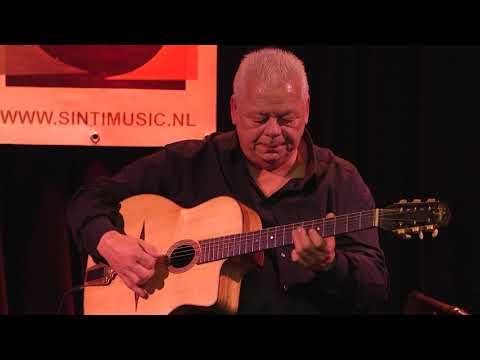 'My Melancholy Baby' - Feigeli Prisor Band ft Wattie Rosenberg.Feigeli Prisor Band featuring Wattie Rosenberg · SINTI MUSIC2019 · Cafe Wilhelmina, Eindhoven, 9 December 2019Stage 4M private performance. Cafe Wilhelmina, Eindhoven, 9 December 2019. Live violin and guitar quartet.✓ Featured
 My Melancholy Baby - Hot Club International at Festival Django PortugalHot Club International · Festival Django PortugalLive at Festival Django PortugalStage 4M private performance. Live at Festival Django Portugal. Visible ensemble; exact performance year unestablished.Select performance
 My Melancholy Baby played by Joost ZoetemanJoost Zoeteman · Sven JungbeckGuitar performance with accompanimentStage 4M private performance. Guitar performance with accompaniment. The description promotes a separate playalong; this item shows the performed guitar interpretation.Select performance
 Sebastien Giniaux - My Melancholy Baby - Samoreau 2015Sébastien Giniaux · Harry Diplock2015 · Samoreau 2015Stage 4M private performance. Samoreau 2015. Informal night jam; dark but guitar visible.Select performance
 My Melancholy baby - Festival Django Reinhardt 2024Giacomo Smith, Hugo Guezbar, Justin Geisler, Moegli Geisler and Esteban Feliz · RT Jouaville2024 · Django Reinhardt Festival 2024Stage 4M private performance. Django Reinhardt Festival 2024. Informal live jam; some players and guitar hands are outside the frame.Select performance
Loop C7–Fm, then F7–B♭7. Use the same rhythmic motif in each loop and change only the notes that define the chord quality.
Use a warm, unhurried pulse. Make Fm and F7 different colours while keeping the melody in the foreground.
Start around 100–140 bpm; increase only after the form stays secure
Loop C7–Fm, then F7–B♭7. Use the same rhythmic motif in each loop and change only the notes that define the chord quality.
Begin with four quarter-note clicks. Halve the click rate and hear beats 2 and 4 while maintaining the same phrase lengths.
My Melancholy Baby — E♭ major; 32 printed bars; learn the two different phrase endings. Agree the pickup, tempo and ending before counting in.
32 printed bars; learn the two different phrase endings. Keep the head and solo chorus lengths explicit at the count-in.
Start with melody and bass only. Add the following colour without interrupting the melody: Resolve E natural on C7 into F on Fm.
Use a warm, unhurried pulse. Make Fm and F7 different colours while keeping the melody in the foreground. Agree the full roadmap and signal the last head before it starts.
Choose a comfortable vocal key and transpose the whole arrangement, including its introduction and ending.
Search online videos of "My Melancholy Baby" in youtube.com ↗
This player guide combines inherited recording evidence and editorial study notes. Musical study notes are editorial suggestions; compare them with the recording.
Djangopedia — inherited chart and recording rows ↗
Composition credits and background ↗
Guitare Improvisation — practice backing ↗
Feature photograph — source collection ↗
Original Djangopedia illustration · AI-assisted, 2026
An original editorial interpretation of the tune. This is an illustration, not an archival photograph or a documented reconstruction of a recording session.
Generated with the native image-generation tool on 2026-10-08; original editorial artwork, not a historical photograph.
Prompt: Use case: illustration-story. One original editorial feature illustration for Djangopedia's guide “My Melancholy Baby”. Landscape 1536 × 1024, opaque background. Scene: An empty simple chair and closed guitar case beside a clean pale wall; a thin curved thread crosses a shadow changing gently from warm to cool. Songlike continuity over changing harmony is the mood, no personification of a baby. Musical basis from the guide: A lyrical standard with secondary dominants and a chromatic descent. The expressive task is to keep a singing line above the changes rather than make the harmony sound busy. The supplied chart is E♭ major; form: 32 printed bars; learn the two different phrase endings; feel: Swing. These describe musical inspiration, not visible writing. Historical context: My Melancholy Baby is credited here to Ernie Burnett. The source date is 1912; publication, composition and later lyric adaptations may have separate dates. Do not illustrate disputed historical claims or suggest this imagined scene is an archival session. Medium: tempera. Dominant palette: dusty violet graphite and cool white. Composition: low empty chair with sustained shadow. Human presence: none. Strong intentional design, clearly drawn/painted, distinctive material marks; keep essential subject safely within the central 70 percent width and middle 80 percent height for card crops. Maintain enough visual substance at thumbnail size. Broad inspiration observed in old photo, ONLY scale/rhythm and never a reference image: close rehearsal group; layered guitars; microphone vertical. Independently invent every pose, perspective, clothing, setting and lighting. Avoid: No face, baby, source room, sepia melancholy cliché. No photorealism, archival simulation, generated text, letters, numbers, labels, fake musical notation, logo, signature, watermark, fake dates, yellowed-paper patina, recognizable artwork or copied photograph. No imitation of any named artist. Render the art edge to edge without borders, mockup or typography. Batch A diversity compensation: avoid blue sky, drifting clouds, cypress trees, moon discs, generic Paris landmarks and curving terrace backdrops unless explicitly essential to the stated scene. Keep this composition tied to its precise stated subject; do not add an unrequested landscape or city. For figure scenes keep the specified standing/walking pose; no seated centered guitar portrait. For abstracts keep purely graphic materials and forms.
Photograph provenance and rights are stated separately. Attribution does not establish permission.