
Tune details
Music: Django Reinhardt, Stéphane Grappelli
Documented in archive: 1937
Original key: Not established
Study level: Intermediate
 Djangopedia
A fleet turnaround tune with a bridge only a semitone above home. It is an unusually good test of whether you hear chord function or merely remember familiar guitar shapes.
Practise the E♭ bridge until it feels as familiar as D.
Owner content reviewed — 2026-10-04T17:07:23Z by admin. Coverage measures presence, not accuracy. Content review does not certify rights or musical perfection.
Django recordings for this tune. Uploader dates and take labels remain source claims; only an evidenced exact association enables a row’s Listen control.
Django Reinhardt
source-described; accuracy not independently verified
Uploader identifies this as Django Reinhardt’s performance; recording date and take require comparison with the discography.
| Entry | Year | Recording / session / release evidence | Listen |
|---|---|---|---|
| 01 | 1937 | Daphne,OLA 2149-1,"Fremeaux 306, Affinity AFS 1003, EMI 780671-2, Jazz Time 790560-2" | — |
| 02 | 1938 | Daphne, 31/1/38, DTB 3528-1 ,"Fremeaux 307, JSP 342, Classics 777,Verve 516 931-2, Music Memoria 87948, Jazz Archives 157222, Rhapsody RHCD6"," - London - QHCF - Stephane Grappelly (v), Django Reinhardt, Roger Chaput, Eugene Vees (g), Louis Vola (b)" | — |
| 03 | 1938 | Daphne, 22/4/38, Airshot ,Fremeaux 307," - Paris - Stephane Grappelly (v), Django Reinhardt, Joseph Reinhardt,Eugene Vees (g), Roger Grasset (b)" | — |
| 04 | 1938 | Daphne, 30/6/38, Acetate ,Fremeaux 308, - Swing Night in Paris | — |
| 05 | 1940 | Daphne, 12/1/40, Acetate ,"Fremeaux FA 309, Vogue 228E 6004**"," - Paris - Gus Viseur (acc), Django Reinhardt (g), Emmanuel Soudieux (b)?" | — |
| 06 | 1940 | Daphne, 22/3/40, OSW 120-1 ,"Fremeaux FA 310, Classics 831, Affinity AFS 1003, Jazz Time 252707-2, HEP 1041"," - Reinhardt, Brun, Allier, Renard, Paquinet, Ekyan, Combelle & Rhythm" | — |
| 07 | 1947 | Daphne, Nov. 1947, "Fremeaux FA 316, Vogue 228E 6009, Vogue 600121, Vogue 670205", RTF Broadcast | — |
| 08 | 1949 | Daphne, Jan-Feb 1949, CW 34, "Fremeaux FA 317, RCA ND 70929-2, RCA ND 90448, Suisa CD 32"," - Rome - Django Reinhardt (g), Stephane Grappelly (v),Gianni Safred (p), Carlo Pecori (b), Aurelio de Carolis (d)" | — |
A dash means no video has been associated with this exact historical recording. Tune-level listening resources remain available above.
The original archive places the tune in Django’s late-1930s repertoire and includes the London session of 31 January 1938. The joint Reinhardt–Grappelli composition remains a practical study in moving a tonal pattern to a neighbouring key.
Music: Django Reinhardt, Stéphane Grappelli
Documented in archive: 1937
Original key: Not established
Study level: Intermediate
Listening task: Keep the A-section phrase endings light enough for the next pickup. Count the head before comparing solo choruses.
Daphne,OLA 2149-1,"Fremeaux 306, Affinity AFS 1003, EMI 780671-2, Jazz Time 790560-2"
Compare the tempo, key, introduction and final cadence with the first entry. Practise the E♭ bridge until it feels as familiar as D.
Daphne, Jan-Feb 1949, CW 34, "Fremeaux FA 317, RCA ND 70929-2, RCA ND 90448, Suisa CD 32"," - Rome - Django Reinhardt (g), Stephane Grappelly (v),Gianni Safred (p), Carlo Pecori (b), Aurelio de Carolis (d)"
Count its form and check its key before joining in. The A section cycles D–Bm–Em–A7, with D7 leading to G and a diminished approach back home. The bridge repeats a similar cycle in E♭, then A7 restores the pull to D.
The A section cycles D–Bm–Em–A7, with D7 leading to G and a diminished approach back home. The bridge repeats a similar cycle in E♭, then A7 restores the pull to D.
Chord symbols follow the inherited Djangopedia chart. Slashes are rhythmic marks; chord quality and turnaround choices may differ from the backing track. This is a chord reference, not a melody transcription.
[[Image:Daphne.gif]]

| D69/ Bm7/ | Em7/ A7/ | D69/ Bm7/ | Em7/ A7/ | D69/ D7/ | G/ G#0/ | D69/ Bm7/ | Em7/ A7/ |

| D69/ Bm7/ | Em7/ A7/ | D69/ Bm7/ | Em7/ A7/ | D69/ D7/ | G/ G#0/ | D69/ A7/ | D69/// |

| Eb69/ Cm7/ | Fm7/ Bb7 | Eb69/ Cm7/ | Fm7/ Bb7/ | Eb69/ Cm7/ | Fm7/ Bb7 | Eb69/// | A7/// |

| D69/ Bm7/ | Em7/ A7/ | D69/ Bm7/ | Em7/ A7/ | D69/ D7/ | G/ G#0/ | D69/ Bm7/ | Em7/ A7/ |
Original source ↗
Guitare Improvisation
5:46
If playback is unavailable, use the source link.
 Daphné (190 bpm) - Gypsy jazz Backing track / Jazz manoucheGuitare Improvisation5:46✓ Featured
 Gypsy Jazz Play Along - DaphneGonzalo Bergara2:41Select video
 Daphné (150 bpm) - Gypsy jazz Backing track / Jazz manoucheGuitare Improvisation5:26Select video
 Gypsy Jazz Backing Track / Play Along - DaphneStudy Gypsy Jazz2:37Select video
Performed studies, transcriptions, TAB, notation and lessons for studying Django’s solo. Inclusion does not certify note-for-note accuracy.
Martin Traussnigg
source-described; accuracy not independently verified
Creator presents a study of Django’s recorded solo. Use it alongside the original recording; exact transcription accuracy has not been independently reviewed.
If playback is unavailable, use the source link.
 Django Reinhardt - Daphne (Guitar Solo Transcription) Stimer ST-48Martin Traussniggsource-described; accuracy not independently verifiedCreator presents a study of Django’s recorded solo. Use it alongside the original recording; exact transcription accuracy has not been independently reviewed.✓ Featured
 Daphné - Django Reinhardt - SOLO + TABGypsy Jazz Manouche - Sébastien DorotteOwner-selected media; guide content review is a separate decision. Video title and channel inspected 2026-10-04.Owner-selected Django solo study during Stage 4F. Exact recording take and transcription accuracy have not been independently established.Select video
Follow a shared key, a harmonic idea or a familiar form. Keys refer to this site’s chart editions; other recordings may use a different key.
Showing 8 of 9 matches. Explore the full catalogue →
Showing 8 of 85 matches. Explore the full catalogue →
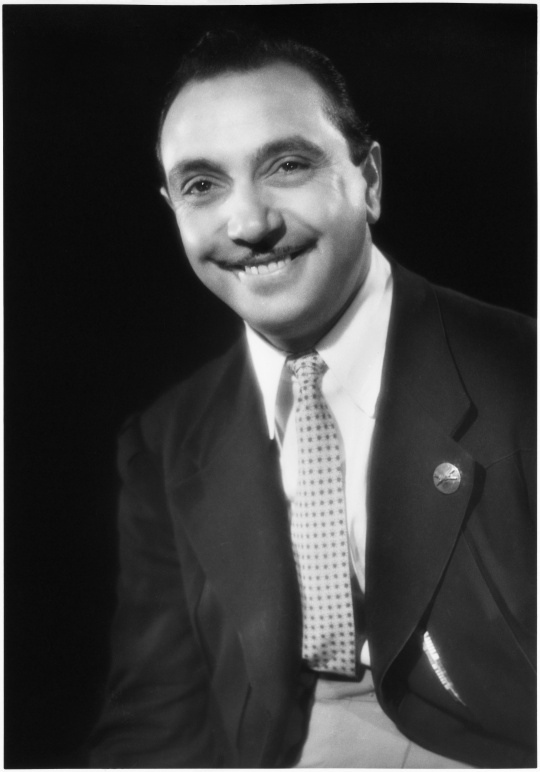
Chosen as a view of Django from 1944, to place the study beside his changing performing life. The closest dated recording entry here is 1947. This is an editorial pairing; the photograph is not claimed to depict a performance or session of this tune.
A formal Studio Harcourt portrait. The credited studio and year come from the linked file record. The portrait is not a recording-session photograph.
Explore this photograph, its context & credits →Selected performances by notable Gypsy Jazz players and ensembles. Inclusion is editorial and does not imply an objective popularity ranking.
Joscho Stephan, Olli Soikkeli and Volker Kamp · Joscho Stephan
Gypsy jazz trio · Watch-page identity, tune, performers and Gypsy jazz context checked 2026-10-07; date/session details remain source claims.
The musicians’ own trio interpretation of Django’s composition, separate from linked lesson material.
If playback is unavailable, use the source link.
 Django Reinhardt's "Daphne" ⎮Joscho Stephan feat. Olli SoikkeliJoscho Stephan, Olli Soikkeli and Volker Kamp · Joscho StephanGypsy jazz trio · Watch-page identity, tune, performers and Gypsy jazz context checked 2026-10-07; date/session details remain source claims.The musicians’ own trio interpretation of Django’s composition, separate from linked lesson material.✓ Featured
 Daphne (Version longue)Biréli Lagrène Gipsy Project · Biréli Lagrène2001 · Gipsy Project — extended version · Watch-page identity, tune, performers and Gypsy jazz context checked 2026-10-07; date/session details remain source claims.Artist release of the longer Daphne performance; year denotes the album release.Select video
 Django Reinhardt 's Daphne - Bireli Lagrene & Richard Galliano (jazz manouche live)Biréli Lagrène and Richard Galliano · CharlieGipsy Project and Friends — live · Watch-page identity, tune, performers and Gypsy jazz context checked 2026-10-07; date/session details remain source claims.Live jazz manouche collaboration featuring Richard Galliano on accordion.Select video
 Daphne - Gypsy Jazz Style GuitarDamjan Pejcinoski Quartet · Damjan PejcinoskiGypsy jazz quartet — Maldives · Watch-page identity, tune, performers and Gypsy jazz context checked 2026-10-07; date/session details remain source claims.Quartet performance recorded at Four Seasons Landaa Giraavaru in the Maldives; this upload is a band performance rather than a TAB lesson.Select video
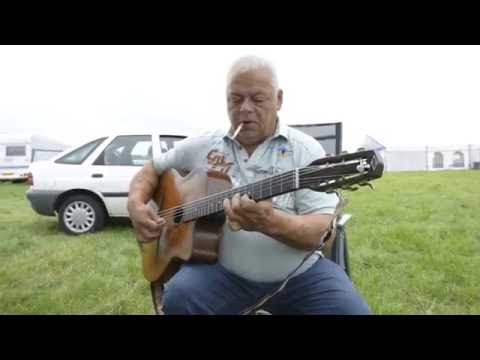 Feigeli Prisor - DaphnéFeigeli Prisor and Jetto Winterstein · Guido Giotta2016 · Acoustic jam near Roermond · Watch-page identity, tune, performers and Gypsy jazz context checked 2026-10-07; date/session details remain source claims.Guitar jam recorded on 30 July 2016, as identified by the uploader.Select video
Play the A turnaround in D and immediately in E♭. Next improvise across the last two bridge bars into D using only four notes, then expand the rhythm.
Use compact sixth and seventh shapes. The half-step key shift can be physically simple, but the last A7 must be deliberate.
Start at 100–120; build toward 160–200 bpm
Play the A turnaround in D and immediately in E♭. Next improvise across the last two bridge bars into D using only four notes, then expand the rhythm.
Start below the suggested tempo. First hear four quarter-note clicks, then halve the click rate and place clicks on beats 2 and 4. Keep the same phrase length.
Daphne — D major; 32 bars, AABA; bridge in E♭ major. Agree the tempo, pickup, solo order and ending before the count.
Announce D major and the E♭ bridge when calling the tune with unfamiliar players.
Keep a simple bass anchor under turnaround melody; use fuller voicings only at the end of each eight-bar phrase.
Announce D major and the E♭ bridge when calling the tune with unfamiliar players.
This guide studies an instrumental arrangement. Any later lyric adaptation requires its own credit and chosen key.
This player guide combines inherited recording evidence and editorial study notes. Musical study notes are editorial suggestions; compare them with the recording.
Guitare Improvisation — backing track ↗
Feature photograph — Studio Harcourt / Wikimedia Commons ↗
Studio Harcourt / Wikimedia Commons · France · 1944
Public domain in France (PD-France), per Commons
Photograph source ↗ · Rights details ↗Used to illustrate Django’s life; no connection to this tune’s recording session is claimed.
Photograph rights are documented separately in its credit. They do not establish the rights status of the composition or recording.