Tune details
Music: Django Reinhardt
Documented in archive: 1940
Original key: Not established
Study level: Advanced; minor-key swing and fast form control
 Djangopedia
A high-energy minor-key study where rhythmic clarity and a secure roadmap matter more than sheer speed.
Practise one four-bar passage using quarter-note chord tones.

Owner content reviewed — 2026-10-18T10:57:16Z by admin. Coverage measures presence, not accuracy. Content review does not certify rights or musical perfection.
Django recordings for this tune. Uploader dates and take labels remain source claims; only an evidenced exact association enables a row’s Listen control.
Django Reinhardt
source-described; accuracy not independently verified
Uploader identifies this as Django Reinhardt’s performance; recording date and take require comparison with the discography.
| Entry | Year | Recording / session / release evidence | Listen |
|---|---|---|---|
| 01 | 1940 | Vendredi 13,OSW 149-1 ,"Fremeaux FA 310, Classics 852, Affinity AFS 1003, Jazz Time 252707-2, Music Memoria 31005, EMI 780671-2, Mosaic MD6-190(6 CD Set).","13/12/40 - Paris - QHCF+ - Hubert Rostaing (cl), Alix Combelle (cl,ts) Django & Joseph Reinhardt (g), Tony Rovira (b), Pierre Fouad (d)" | — |
| 02 | 1947 | Vendredi 13,"Fremeaux FA 314, Vogue 228E 6006, Vogue 668003-2, Legacy 411(""Lucky 13"")","7-15-22/9/47 - Paris - Souvenirs de Django - Django Reinhardt (elg), Hubert Rostaing (cl), Eugene Vees (g), Emmanuel Soudieux (b), Andre Jourdan (d)" | — |
A dash means no video has been associated with this exact historical recording. Tune-level listening resources remain available above.
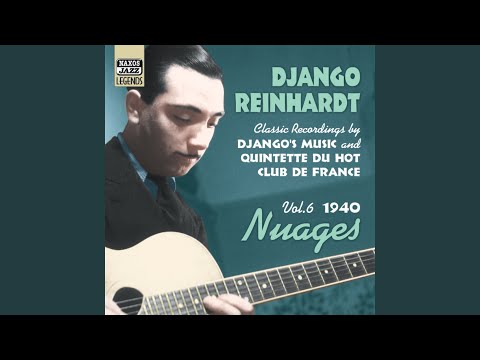
The archive preserves a December 1940 entry and a later Souvenirs de Django entry whose raw text lists several September 1947 dates. The inherited derived year remains 1947; no exact session date is newly chosen. Naxos credits Django as composer on the existing listening reference. The Adrien Tarraga solo study remains in place, alongside proposed Rosenberg/van Hemert and Rosenberg/Fapy performances.
Music: Django Reinhardt
Documented in archive: 1940
Original key: Not established
Study level: Advanced; minor-key swing and fast form control
Compare how the two modern ensembles keep the minor-key line clear at speed, then return to the historical recording for articulation.
Vendredi 13,OSW 149-1 ,"Fremeaux FA 310, Classics 852, Affinity AFS 1003, Jazz Time 252707-2, Music Memoria 31005, EMI 780671-2, Mosaic MD6-190(6 CD Set).","13/12/40 - Paris - QHCF+ - Hubert Rostaing (cl), Alix Combelle (cl,ts) Django & Joseph Reinhardt (g), Tony Rovira (b), Pierre Fouad (d)"
No readable owned grid is present. A creator-labelled D-minor backing establishes one study setting, not the original key of every version. Confirm the minor cadences and any breaks with the chosen arrangement before playing full choruses. Use the contrast between F natural in D minor and C-sharp in its A7 dominant to make resolutions clear. Check the video key before playing with the chart.
No readable owned grid is present. A creator-labelled D-minor backing establishes one study setting, not the original key of every version. Confirm the minor cadences and any breaks with the chosen arrangement before playing full choruses. Use the contrast between F natural in D minor and C-sharp in its A7 dominant to make resolutions clear.
Inherited chart is preserved verbatim as historical study material, not silently corrected or newly authenticated. Check the specific caveats below and match the arrangement and key to the selected video. External teaching material remains on its creator’s site.
No readable chord chart has been added for this title.
Hot Club de France
Swing · 210 BPM · 3m49s · Video available when checked; creator-described attribution.
Creator-provided play-along; instrumentation and feel vary by selection. Check the key and full arrangement before joining in; the guide chart may use another key. Tempo is the creator’s stated value.
If playback is unavailable, use the source link.
 Vendredi 13 - Gypsy Jazz Backing Track 210 BPM - Django ReinhardtHot Club de FranceSwing · 210 BPM · 3m49s · Video available when checked; creator-described attribution.Creator-provided play-along; instrumentation and feel vary by selection. Check the key and full arrangement before joining in; the guide chart may use another key. Tempo is the creator’s stated value.✓ Featured
 Vendredi 13 - Gypsy Jazz Backing Track 250 BPM - Django ReinhardtHot Club de FranceSwing · 250 BPM · 3m13s · Video available when checked; creator-described attribution.Creator-provided play-along; instrumentation and feel vary by selection. Check the key and full arrangement before joining in; the guide chart may use another key. Tempo is the creator’s stated value.Select video
Performed studies, transcriptions, TAB, notation and lessons for studying Django’s solo. Inclusion does not certify note-for-note accuracy.
Adrien Tarraga
source-described; accuracy not independently verified
Creator presents a study of Django’s recorded solo. Use it alongside the original recording; exact transcription accuracy has not been independently reviewed.
If playback is unavailable, use the source link.
Follow a shared key, a harmonic idea or a familiar form. Keys refer to this site’s chart editions; other recordings may use a different key.
No sufficiently supported harmonic comparison has been added yet.
Showing 8 of 13 matches. Explore the full catalogue →
No match is established in the current chart metadata.
Editorial reuse of a verified Gottlieb photograph already in the Djangopedia gallery. This image is not claimed to depict this tune or its recording session.
Part of William P. Gottlieb’s documented Aquarium photographs in New York, circa November 1946. The catalogue supplies the location and approximate date; this is not evidence of a particular tune being played.
Explore this photograph, its context & credits →Selected performances by notable Gypsy Jazz players and ensembles. Inclusion is editorial and does not imply an objective popularity ranking.
Christiaan van Hemert
Video available when checked; creator-described attribution.
Performer attribution follows the video title and channel description. Proposed listening selection; no popularity ranking implied.
If playback is unavailable, use the source link.
 Rosenberg Trio + Christiaan van Hemert - Vendredi 13Christiaan van HemertVideo available when checked; creator-described attribution.Performer attribution follows the video title and channel description. Proposed listening selection; no popularity ranking implied.✓ Featured
 Rosenberg Trio & Fapy Lafertin - Vendredi 13 - Gipsy Festival Geilenkirchen 25.05.2013RhythmbreezeVideo available when checked; creator-described attribution.Performer attribution follows the video title and channel description. Proposed listening selection; no popularity ranking implied.Select video
Practise one four-bar passage using quarter-note chord tones. Repeat it with one offbeat entry and one full beat of silence. Rehearse the last phrase into the next chorus separately before moving toward the faster play-alongs.
Use smaller, lighter strokes as speed increases. Agree the breaks and avoid filling them automatically.
Begin at 100–120 bpm; proposed play-alongs 210 and 250 bpm
Practise one four-bar passage using quarter-note chord tones. Repeat it with one offbeat entry and one full beat of silence. Rehearse the last phrase into the next chorus separately before moving toward the faster play-alongs.
Count quarter notes first. Then place the click on beats 2 and 4 at half the click rate, keeping the phrase length unchanged.
D minor (Gypsy Jazz Essentials study setting); Confirm head, breaks and solo chorus against the chosen version. Agree the arrangement, pickup and ending before counting in.
The 1947 raw date text is a grouped historical reference. It does not establish an exact video-to-session match.
Keep the melody uppermost and begin with a single bass note under each harmony. Compare a D-minor shell with the C-sharp–G guide tones of A7, keeping the melody register clear.
Use smaller, lighter strokes as speed increases. Agree the breaks and avoid filling them automatically.
No vocal arrangement is prescribed; use the instrumental melody as the phrasing reference.
This player guide combines inherited recording evidence and editorial study notes. Musical study notes are editorial suggestions; compare them with the recording.
Djangopedia full discography ↗
Preserved Djangopedia archive
Existing Django listening reference ↗
William P. Gottlieb / Library of Congress · Aquarium, New York, N.Y. · circa November 1946
Gottlieb collection photographs entered the public domain on February 16, 2010, according to the source file page.
Photograph source ↗ · Rights details ↗Used to illustrate Django’s life; no connection to this tune’s recording session is claimed.
