
Tune details
Music: Django Reinhardt
Documented in archive: 1948
Original key: Not established
Study level: Intermediate to advanced
 Djangopedia
A measured bolero-like pulse supports changing major and minor colours. The challenge is to make the harmonic tension expressive without turning the accompaniment into a busy swing pattern.
Make G♯→G expressive while the pulse remains calm.

Owner content reviewed — 2026-10-05T18:27:06Z by admin. Coverage measures presence, not accuracy. Content review does not certify rights or musical perfection.
Django recordings for this tune. Uploader dates and take labels remain source claims; only an evidenced exact association enables a row’s Listen control.
Django Reinhardt
source-described; accuracy not independently verified
Uploader identifies this as Django Reinhardt’s performance; recording date and take require comparison with the discography.
| Entry | Year | Recording / session / release evidence | Listen |
|---|---|---|---|
| 01 | 1948 | Troublant Bolero, Dec 1948, "Fremeaux FA 316, Vogue 228E 6009, RCA 74321 237692"," - Concert in Brussels - Hubert Rostaing (cl), Django Reinhardt (g), Henri ""Louson"" Baumgartner (g), Louis Vola (b), Arthur Motta (d)" | — |
| 02 | 1949 | Troublant Bolero, Jan-Feb 1949, WL 211 ,"Fremeaux FA 318, LP Pathe C 054 16019"," - Rome - Django Reinhardt (g), Stephane Grappelly (v),Gianni Safred (p), Carlo Pecori (b), Aurelio de Carolis (d)." | — |
| 03 | 1952 | Troublant Bolero, 30/1/52, P 1181 ,"DRG 8473,Musidisc 403222"," - Paris - Django Reinhardt (elg), Roger Guerin (tpt), Hubert Fol (as), Raymond Fol (p), Barney Spieler (b), Pierre Lemarchand (d)" | — |
A dash means no video has been associated with this exact historical recording. Tune-level listening resources remain available above.
The legacy discography includes a Brussels concert in December 1948 and later versions. Troublant Boléro is distinct from Django’s separate piece titled Boléro. This guide follows the inherited E-centred arrangement rather than treating every performance as identical.
Music: Django Reinhardt
Documented in archive: 1948
Original key: Not established
Study level: Intermediate to advanced
Listening task: Let sustained notes carry the tension while the pulse stays measured. Count the head before comparing solo choruses.
Troublant Bolero, Dec 1948, "Fremeaux FA 316, Vogue 228E 6009, RCA 74321 237692"," - Concert in Brussels - Hubert Rostaing (cl), Django Reinhardt (g), Henri ""Louson"" Baumgartner (g), Louis Vola (b), Arthur Motta (d)"
Compare the tempo, key, introduction and final cadence with the first entry. Make G♯→G expressive while the pulse remains calm.
Troublant Bolero, 30/1/52, P 1181 ,"DRG 8473,Musidisc 403222"," - Paris - Django Reinhardt (elg), Roger Guerin (tpt), Hubert Fol (as), Raymond Fol (p), Barney Spieler (b), Pierre Lemarchand (d)"
Count its form and check its key before joining in. E major becomes E minor before A7 leads toward D. C7–B7 brings the phrase back toward E. The bridge visits Am and G-coloured harmony before B7 prepares the final A.
E major becomes E minor before A7 leads toward D. C7–B7 brings the phrase back toward E. The bridge visits Am and G-coloured harmony before B7 prepares the final A.
Chord symbols follow the inherited Djangopedia chart. Slashes are rhythmic marks; chord quality and turnaround choices may differ from the backing track. This is a chord reference, not a melody transcription.
[[Image:Troublant.gif]]


| E/// | E6/// | Em/// | A7/// | D/// | C7/// | B7/// | B7/ E7/ |

| E/// | E6/// | Em/// | A7/// | D/// | C7/ B7/ | E/// | E7/// |

| Am/// | D7/// | G0/ G/ | G#0/// | Am/// | F#0/// | B7/// | B7/ E7/ |

| E/// | E6/// | Em/// | A7/// | D/// | C7/ B7/ | E/// | F7/// :||
Original source ↗
Guitare Improvisation
6:01
If playback is unavailable, use the source link.
 Troublant Boléro - Gypsy jazz Backing track / Jazz manoucheGuitare Improvisation6:01✓ Featured
 Gypsy Jazz Play Along - Troublant BoleroGonzalo Bergara2:45Select video
 Troublant Boléro (jazz manouche) + Free TAB + Backing TrackGuitare Improvisation3:49Select video
 Troublant Boléro - Playback jazz manouche - Gypsy jazz backing track / play alongClément Reboul6:24Select video
Performed studies, transcriptions, TAB, notation and lessons for studying Django’s solo. Inclusion does not certify note-for-note accuracy.
Tessa Spaaij
source-described; accuracy not independently verified
Creator presents a study of Django’s recorded solo. Use it alongside the original recording; exact transcription accuracy has not been independently reviewed.
If playback is unavailable, use the source link.
Follow a shared key, a harmonic idea or a familiar form. Keys refer to this site’s chart editions; other recordings may use a different key.
No sufficiently supported harmonic comparison has been added yet.
Showing 8 of 85 matches. Explore the full catalogue →
A line of evenly spaced rounded pulses holds steady while broad translucent arcs shift from luminous teal to dark burgundy around it. The measured bolero and major-to-minor tension remain restrained; neither frenetic swing nor notation.
An original editorial interpretation of the tune. This is an illustration, not an archival photograph or a documented reconstruction of a recording session.
Original Djangopedia illustration · AI-assisted, 2026
Illustration credits & provenance →Selected performances by notable Gypsy Jazz players and ensembles. Inclusion is editorial and does not imply an objective popularity ranking.
Biréli Lagrène Gypsy Project · magicfiddle
2003 · Yoshi’s, Oakland, CA, 2003 · Watch title, source description and available positive-duration player checked 2026-10-05; independent performance; owner accuracy not independently verified.
Lagrène, Florin Niculescu, Thomas Dutronc and Diego Imbert are credited.
If playback is unavailable, use the source link.
 Bireli Lagrene - "Troublant Bolero" (Django Reinhardt) - Gypsy JazzBiréli Lagrène Gypsy Project · magicfiddle2003 · Yoshi’s, Oakland, CA, 2003 · Watch title, source description and available positive-duration player checked 2026-10-05; independent performance; owner accuracy not independently verified.Lagrène, Florin Niculescu, Thomas Dutronc and Diego Imbert are credited.✓ Featured
 Angelo Debarre: "Troublant Bolero"Angelo Debarre · keefboof2015 · Atelier Charonne, Paris, 13 September 2015 · Watch title, source description and available positive-duration player checked 2026-10-05; independent performance; owner accuracy not independently verified.Live performance; other ensemble members are not credited in the source.Select video
 Joscho Stephan and Friends - Troublant BoleroJoscho Stephan and friends · cminor7b52010 · Django in June, Northampton, MA, 2010 · Watch title, source description and available positive-duration player checked 2026-10-05; independent performance; owner accuracy not independently verified.With Denis Chang, Rob Reich and Martin Sjöstedt.Select video
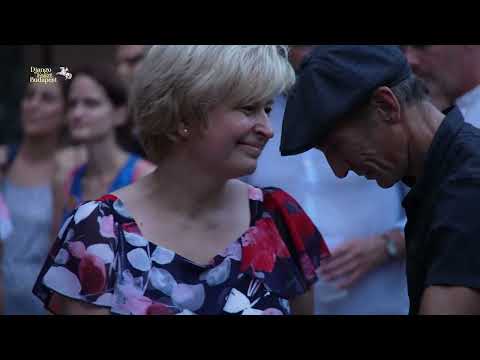 Még egy Kört! Gypsy Jazz Band ft. Roby Lakatos - Troublant Bolero - Django Feszt Budapest 2022Még egy Kört! Gypsy Jazz Band featuring Roby Lakatos · Django Feszt Budapest2022 · Django Feszt Budapest 2022 · Watch title, source description and available positive-duration player checked 2026-10-05; independent performance; owner accuracy not independently verified.Festival performance featuring Lakatos, Leó Ullmann and István Babindák.Select video
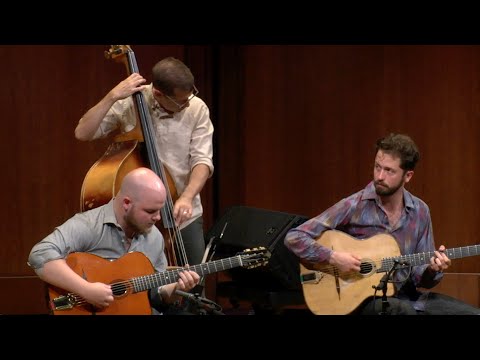 "Troublant Bolero" (Django Reinhardt) - Jason Anick and Henry AckerJason Anick and Henry Acker Quartet · magicfiddleMaltz Center, Cleveland, OH · Watch title, source description and available positive-duration player checked 2026-10-05; independent performance; owner accuracy not independently verified.With Andrew Brown and Greg Loughman; live ensemble performance.Select video
 Troublant Bolero (Django Reinhardt) - Robin Nolan Trio with Jason AnickRobin Nolan Trio with Jason Anick · magicfiddleQuicks Hole Tavern, Woods Hole, MA · Watch title, source description and available positive-duration player checked 2026-10-05; independent performance; owner accuracy not independently verified.Nolan and Anick with Richard “Shepp” Sheppard and Arnaud Van Den Berg.Select video
Repeat E→Em with one upper voice changing by a semitone. Then practise C7→B7→E while maintaining the same quiet rhythmic pattern for three minutes.
Use a restrained, repeating bolero-like accompaniment agreed with the bassist. Short chord responses and sustained bass can create contrast without adding extra fills.
Start at 70–90; explore a measured 100–120 bpm
Repeat E→Em with one upper voice changing by a semitone. Then practise C7→B7→E while maintaining the same quiet rhythmic pattern for three minutes.
Start below the suggested tempo. First hear four quarter-note clicks, then halve the click rate and place clicks on beats 2 and 4. Keep the same phrase length.
Troublant Bolero — E major with minor contrast; 32 bars, AABA in the inherited chart. Agree the tempo, pickup, solo order and ending before the count.
Agree the groove first, including whether the rhythm guitar uses a bolero pattern or a swing adaptation.
Use sustained bass and melody with occasional inner-voice changes rather than constant strumming.
Agree the groove first, including whether the rhythm guitar uses a bolero pattern or a swing adaptation.
This guide studies an instrumental arrangement. Any later lyric adaptation requires its own credit and chosen key.
This player guide combines inherited recording evidence and editorial study notes. Musical study notes are editorial suggestions; compare them with the recording.
Composition background and credits ↗
Guitare Improvisation — backing track ↗
Feature photograph — Gypsy Jazz UK historical archive ↗
Original Djangopedia illustration · AI-assisted, 2026
An original editorial interpretation of the tune. This is an illustration, not an archival photograph or a documented reconstruction of a recording session.
Generated with the native image-generation tool on 2026-10-08; original editorial artwork, not a historical photograph.
Prompt: Use case: illustration-story. One original editorial feature illustration for Djangopedia's guide “Troublant Bolero”. Landscape 1536 × 1024, opaque background. Scene: A line of evenly spaced rounded pulses holds steady while broad translucent arcs shift from luminous teal to dark burgundy around it. The measured bolero and major-to-minor tension remain restrained; neither frenetic swing nor notation. Musical basis from the guide: A measured bolero-like pulse supports changing major and minor colours. The challenge is to make the harmonic tension expressive without turning the accompaniment into a busy swing pattern. The supplied chart is E major with minor contrast; form: 32 bars, AABA in the inherited chart; feel: Bolero / measured pulse. These describe musical inspiration, not visible writing. Historical context: The legacy discography includes a Brussels concert in December 1948 and later versions. Troublant Boléro is distinct from Django’s separate piece titled Boléro. This guide follows the inherited E-centred arrangement rather than treating every performance as identical. Do not illustrate disputed historical claims or suggest this imagined scene is an archival session. Medium: gouache rhythmic geometry. Dominant palette: silver dark teal and restrained burgundy. Composition: measured repeated pulses with inward turn. Human presence: none. Strong intentional design, clearly drawn/painted, distinctive material marks; keep essential subject safely within the central 70 percent width and middle 80 percent height for card crops. Maintain enough visual substance at thumbnail size. Broad inspiration observed in old photo, ONLY scale/rhythm and never a reference image: guitar prominent over smaller child; deep dark contrast; intimate scale. Independently invent every pose, perspective, clothing, setting and lighting. Avoid: No father-child photo, portrait, dancer costume, notes. No photorealism, archival simulation, generated text, letters, numbers, labels, fake musical notation, logo, signature, watermark, fake dates, yellowed-paper patina, recognizable artwork or copied photograph. No imitation of any named artist. Render the art edge to edge without borders, mockup or typography. Batch B diversity compensation: make light and midtone areas substantial; avoid near-black dominant backdrops, violet monochrome, empty chair/stool/bench compositions, repeated sunset terraces and generic cloud panoramas. Preserve the stated tune-specific scene. Human figures remain standing or peripheral except an explicitly named ensemble; no centered seated Django portrait. For graphic images use clearly plain colour shapes, no ruled parallel staffs, circles with stems, note-like marks or typography.
Photograph rights are documented separately in its credit. They do not establish the rights status of the composition or recording.
