
Tune details
Music: Johnny Green
Words: Edward Heyman, Robert Sour, Frank Eyton
Published / composed / adapted — see history: 1930
Original key: Not established
Study level: Intermediate; advanced where the inherited roadmap needs reconstruction
 Djangopedia
A ballad whose chromatic routes demand patient voice leading. The opening begins away from the tonic, while the bridge makes unusually vivid changes of key.
Hear the bridge’s D-major arrival clearly.
Owner content reviewed — 2026-10-06T15:53:55Z by admin. Coverage measures presence, not accuracy. Content review does not certify rights or musical perfection.
Django recordings for this tune. Uploader dates and take labels remain source claims; only an evidenced exact association enables a row’s Listen control.
Uploader identifies this as Django Reinhardt’s performance; recording date and take require comparison with the discography.
| Entry | Year | Recording / session / release evidence | Listen |
|---|---|---|---|
| 01 | 1937 | Body And Soul, 22/4/37, OLA 1710-1 ,"Fremeaux FA 305, Affinity AFS 1003, Classics 748, Jazz Archives ZET 752, EMI 780671-2, Mosaic MD6-190(6 CD Set).", - Paris - QHCF | — |
| 02 | 1938 | Body And Soul, 31/5/38, CL 6716-1,"Fremeaux FA 308, Classics 777"," - Paris - Larry Adler (har), Stephane Grappelly (p), Django Reinhardt (g),Joseph Reinhardt, Eugene Vees (g), Roger Grasset (b)" | — |
| 03 | 1949 | Body And Soul, Jan-Feb 1949, WL 220 ,(unissued)," - Rome - Django Reinhardt (g), Stephane Grappelly (v),Gianni Safred (p), Carlo Pecori (b), Aurelio de Carolis (d)." | — |
A dash means no video has been associated with this exact historical recording. Tune-level listening resources remain available above.
Body And Soul is credited here to Johnny Green. The source date is 1930; publication, composition and later lyric adaptations may have separate dates. The inherited archive lists 3 recording entries, with dated entries spanning 1937–1949. These are archive rows, not a claim that every entry is a distinct released take. The old prose mentions 1938 and 1939, while the first detailed row is dated 22 April 1937. The recording evidence and that prose conflict are kept distinct.
Music: Johnny Green
Words: Edward Heyman, Robert Sour, Frank Eyton
Published / composed / adapted — see history: 1930
Original key: Not established
Study level: Intermediate; advanced where the inherited roadmap needs reconstruction
Listening task: Practise the opening without embellishment until each sustained note has a clear harmonic destination. Mark the key, pickup, phrase lengths and ending before comparing another version.
Body And Soul, 22/4/37, OLA 1710-1 ,"Fremeaux FA 305, Affinity AFS 1003, Classics 748, Jazz Archives ZET 752, EMI 780671-2, Mosaic MD6-190(6 CD Set).", - Paris - QHCF
Compare the first and last listed entries for tempo, instrumentation and arrangement. Do not infer identical takes from a shared title. Hear the bridge’s D-major arrival clearly.
Body And Soul, Jan-Feb 1949, WL 220 ,(unissued)," - Rome - Django Reinhardt (g), Stephane Grappelly (v),Gianni Safred (p), Carlo Pecori (b), Aurelio de Carolis (d)."
The inherited chart is in D♭ major; D and C areas in the bridge. Confirm the backing track’s sounding key, pickup and complete form before playing; an instrument label may describe a transposed score.
E♭ minor and altered dominants frame D♭. The bridge moves to D major, then toward C before a descending dominant route returns to the final A section.
Chord symbols and source cell divisions are preserved from Djangopedia. Slashes mark rhythm; 0 is inherited diminished notation whose exact voicing should be checked against the melody. This is a chord reference, not a melody transcription.
[[Image:Bodysoul.gif]]

| Ebm/ Bb7/ | Ebm/ D7/ | Db/ Gb7/ | Fm/ E0/ | Ebm/// | C0/ F7/ | Bbm/ Ebm Ab7 | Db/ Bb7(9-)/ |

| Ebm/ Bb7/ | Ebm/ D7/ | Db/ Gb7/ | Fm/ E0/ | Ebm/// | C0/ F7/ | Bbm/ Ebm Ab7 | Db/ Em A7 |

| D/ Em/ | F#m/ Gm6/ | F#m Bm Em A7 | D/// | Dm/ G7/ | Em/ Eb0/ | Dm/ G7/ | C7 B7 Bb7/ |

| Ebm/ Bb7/ | Ebm/ D7/ | Db/ Gb7/ | Fm/ E0/ | Ebm/// | C0/ F7/ | Bbm/ Ebm Ab7 | Db/// ||:
Original source ↗
Guitare Improvisation · The inherited chart is in D♭ major; D and C areas in the bridge. Confirm the backing track’s sounding key, pickup and complete form before playing; an instrument label may describe a transposed score. · 6:15
Checked 2026-10-01
Most-viewed suitable match selected from the captured search results after title/composition review; not a complete YouTube ranking. Source counts were captured on 1 October 2026. Coaching, unrelated songs and non-backing performances are excluded.
Performed studies, transcriptions, TAB, notation and lessons for studying Django’s solo. Resources are described by their creator; inclusion does not certify note-for-note accuracy.
Nick Nasty · Nick Nasty · Uploader: in the style of Django Reinhardt; intro, rhythm comping and solo transcription; no year/session/take stated. · Visible picked and fretted solo at 2:11. The uploader claims a solo transcription but also says in the style of Django; Django-source identity and extent remain uncertain. Retained only as B for owner review. Checked 2026-10-06; private research candidate, not owner approved. Note-for-note accuracy not independently verified.
Stage 4L — Class B. 3:19 intro/comping/solo; later solo frame inspected at 2:11. No notation visible. Source claim: Uploader: in the style of Django Reinhardt; intro, rhythm comping and solo transcription; no year/session/take stated.
Follow a shared key, a harmonic idea or a familiar form. Keys refer to this site’s chart editions; other recordings may use a different key.
No sufficiently supported harmonic comparison has been added yet.
No match is established in the current chart metadata.
Showing 8 of 42 matches. Explore the full catalogue →
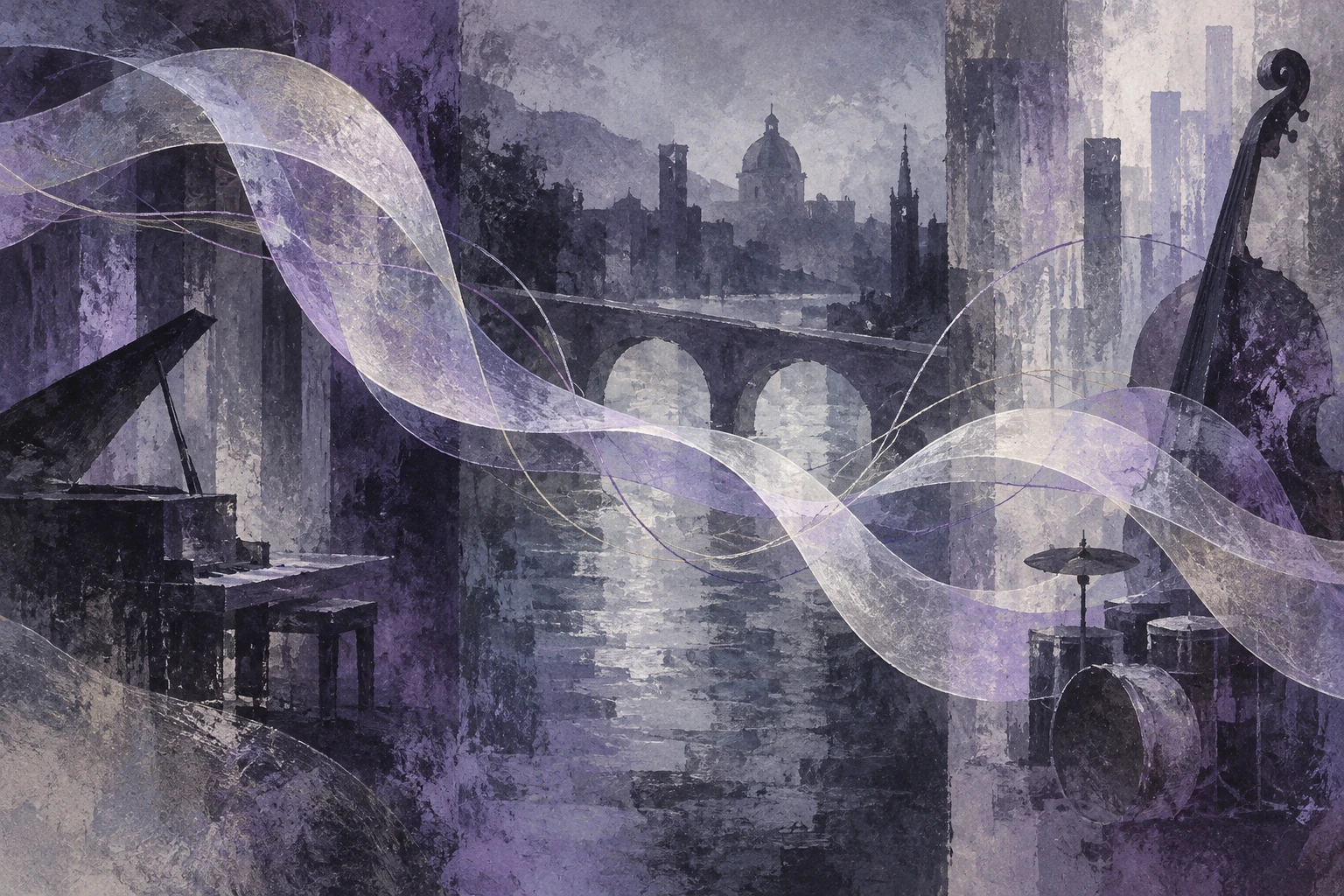
A broad bodily contour becomes two patient translucent ribbons moving through three distinct tonal fields, each connected by thin chromatic threads. The sustained ribbon suggests a ballad melody crossing remote bridge keys, neither anatomy study nor readable music.
An original editorial interpretation of the tune. This is an illustration, not an archival photograph or a documented reconstruction of a recording session.
Original Djangopedia illustration · AI-assisted, 2026
Illustration credits & provenance →Selected performances by notable Gypsy Jazz players and ensembles. Inclusion is editorial and does not imply an objective popularity ranking.
Stochelo Rosenberg and Eddy · Jacopoj
Informal live guitar duet
Stage 4M private performance. Informal live guitar duet. Eddy’s surname and exact performance date are unestablished.
If playback is unavailable, use the source link.
 Stochelo Rosenberg & Eddy - Body and SoulStochelo Rosenberg and Eddy · JacopojInformal live guitar duetStage 4M private performance. Informal live guitar duet. Eddy’s surname and exact performance date are unestablished.✓ Featured
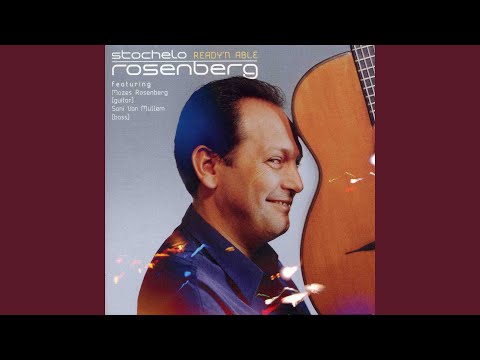 Body and SoulStochelo Rosenberg · Stochelo Rosenberg - TopicReady’n Able; official Iris album audioStage 4M private performance. Ready’n Able; official Iris album audio. Static cover; 2005 release is not a verified recording year.Select performance
 Bireli Lagrene "Body & Soul" Jazzland, Vienna 25.05.21Biréli Lagrène · Andy Bartosh All That Music2021 · Jazzland, Vienna, 25 May 2021Stage 4M private performance. Jazzland, Vienna, 25 May 2021. Extended live guitar performance, approximately 11:55.Select performance
 Body and SoulBiréli LagrèneStandards; official Parlophone album audioStage 4M private performance. Standards; official Parlophone album audio. Static cover; electric jazz interpretation.Select performance
 BODY AND SOULBiréli Lagrène, Joey DeFrancesco and Elvin Jones · inegmax1999 · Marciac 1999Stage 4M private performance. Marciac 1999. Electric jazz crossover with organ and drums.Select performance
Play the bridge with roots in the bass and a single guide tone above. Then sing the melody over those two-note shapes at a slow pulse.
Use spacious shells and allow the melody’s suspensions to resolve. Avoid placing every altered extension directly beneath a held melody note.
Start around 60–90 bpm and preserve the full phrase
Play the bridge with roots in the bass and a single guide tone above. Then sing the melody over those two-note shapes at a slow pulse.
Begin with four quarter-note clicks. Halve the click rate and hear beats 2 and 4 while maintaining the same phrase lengths.
Body And Soul — D♭ major; D and C areas in the bridge; 32 bars, AABA in the inherited chart. Agree the pickup, tempo and ending before counting in.
32 bars, AABA in the inherited chart. Keep the head and solo chorus lengths explicit at the count-in.
Start with melody and bass only. Add the following colour without interrupting the melody: Hear F as the third of D♭, then F♯ when the bridge reaches D.
Use spacious shells and allow the melody’s suspensions to resolve. Avoid placing every altered extension directly beneath a held melody note. Agree the full roadmap and signal the last head before it starts.
Choose a comfortable vocal key and transpose the whole arrangement, including its introduction and ending.
This player guide combines inherited recording evidence and editorial study notes. Musical study notes are editorial suggestions; compare them with the recording.
Djangopedia — inherited chart and recording rows ↗
Composition credits and background ↗
Guitare Improvisation — practice backing ↗
Feature photograph — source collection ↗
Original Djangopedia illustration · AI-assisted, 2026
An original editorial interpretation of the tune. This is an illustration, not an archival photograph or a documented reconstruction of a recording session.
Generated with the native image-generation tool on 2026-10-08; original editorial artwork, not a historical photograph.
Prompt: Use case: illustration-story. One original editorial feature illustration for Djangopedia's guide “Body And Soul”. Landscape 1536 × 1024, opaque background. Scene: A broad bodily contour becomes two patient translucent ribbons moving through three distinct tonal fields, each connected by thin chromatic threads. The sustained ribbon suggests a ballad melody crossing remote bridge keys, neither anatomy study nor readable music. Musical basis from the guide: A ballad whose chromatic routes demand patient voice leading. The opening begins away from the tonic, while the bridge makes unusually vivid changes of key. The supplied chart is D♭ major; D and C areas in the bridge; form: 32 bars, AABA in the inherited chart; feel: Ballad / gentle swing. These describe musical inspiration, not visible writing. Historical context: Body And Soul is credited here to Johnny Green. The source date is 1930; publication, composition and later lyric adaptations may have separate dates. Do not illustrate disputed historical claims or suggest this imagined scene is an archival session. Medium: monotype. Dominant palette: violet smoke grey and pearl. Composition: interwoven offset ribbons. Human presence: none. Strong intentional design, clearly drawn/painted, distinctive material marks; keep essential subject safely within the central 70 percent width and middle 80 percent height for card crops. Maintain enough visual substance at thumbnail size. Broad inspiration observed in old photo, ONLY scale/rhythm and never a reference image: several instrument silhouettes; layered depth; gentle contrast. Independently invent every pose, perspective, clothing, setting and lighting. Avoid: No face, band portrait, literal soul apparition or yellow paper. No photorealism, archival simulation, generated text, letters, numbers, labels, fake musical notation, logo, signature, watermark, fake dates, yellowed-paper patina, recognizable artwork or copied photograph. No imitation of any named artist. Render the art edge to edge without borders, mockup or typography.
Photograph provenance and rights are stated separately. Attribution does not establish permission.