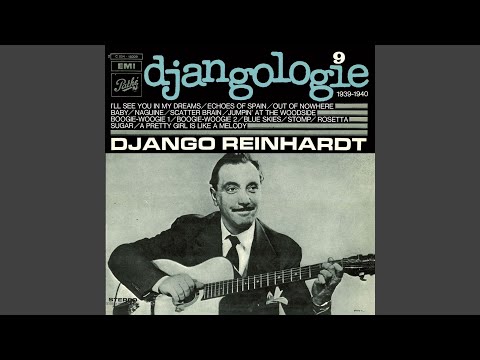
Tune details
Music: Johnny Green
Words: Edward Heyman
Published / composed: 1931
Original key: Not established
Study level: Intermediate harmonic hearing
 Djangopedia
A tranquil major tonic is interrupted by a striking chromatic ii–V that returns unexpectedly home. The tune rewards smooth melodic connections between apparently distant chords.
Connect the chromatic detour to home through a single moving voice.
Owner content reviewed — 2026-10-06T18:39:28Z by admin. Coverage measures presence, not accuracy. Content review does not certify rights or musical perfection.
Django recordings for this tune. Uploader dates and take labels remain source claims; only an evidenced exact association enables a row’s Listen control.
Django Reinhardt
Owner-approved study selection. YouTube identity and player availability checked 6 October 2026; musical accuracy and exact take not independently certified.
Owner selected 6 October 2026. Official Django Reinhardt recording upload; exact recording date and take have not been independently matched to the discography.
| Entry | Year | Recording / session / release evidence | Listen |
|---|---|---|---|
| 01 | 1937 | Out Of Nowhere, 28/4/37, OLA 1744-1 ,"Fremeaux FA 305, Affinity AFS 1003, Conifer HD 230, Jazz Time 251277-2"," - Paris - Coleman Hawkins (ts), Alix Combelle (ts,cl), Benny Carter (as,tpt), Andre Ekyan (as), Stephane Grappelly (p), Django Reinhardt (g), Eugene d'Hellemmes (b), Tommy Benford (d)" | — |
| 02 | 1939 | Out of Nowhere, 30/6/39, OPG 1723-1,"Fremeaux FA 309, Classics 708, Mosaic MD6-190(6 CD Set)."," - Paris - QHCF - Grappelly, Reinhardt" | — |
A dash means no video has been associated with this exact historical recording. Tune-level listening resources remain available above.
Johnny Green and Edward Heyman’s 1931 song was popularised by Bing Crosby. Djangopedia lists Django performances in April 1937 and May 1939; the first entry places him among an ensemble including Coleman Hawkins and Benny Carter.
Music: Johnny Green
Words: Edward Heyman
Published / composed: 1931
Original key: Not established
Study level: Intermediate harmonic hearing
Listening task: Sing the melody across the chromatic ii–V without changing its overall phrase direction. Count the head before comparing solo choruses.
Out Of Nowhere, 28/4/37, OLA 1744-1 ,"Fremeaux FA 305, Affinity AFS 1003, Conifer HD 230, Jazz Time 251277-2"," - Paris - Coleman Hawkins (ts), Alix Combelle (ts,cl), Benny Carter (as,tpt), Andre Ekyan (as), Stephane Grappelly (p), Django Reinhardt (g), Eugene d'Hellemmes (b), Tommy Benford (d)"
Compare the tempo, key, introduction and final cadence with the first entry. Connect the chromatic detour to home through a single moving voice.
Out of Nowhere, 30/6/39, OPG 1723-1,"Fremeaux FA 309, Classics 708, Mosaic MD6-190(6 CD Set)."," - Paris - QHCF - Grappelly, Reinhardt"
Count its form and check its key before joining in. G moves to B♭m–E♭7 and returns to G. Bm–E7 then leads toward Am. The second half changes the final route with Cm6 and a descending connection into Am–D7.
G moves to B♭m–E♭7 and returns to G. Bm–E7 then leads toward Am. The second half changes the final route with Cm6 and a descending connection into Am–D7.
Chord symbols follow the inherited Djangopedia chart. Slashes are rhythmic marks; chord quality and turnaround choices may differ from the backing track. This is a chord reference, not a melody transcription.
[[Image:Out_of_nowhere.gif]]


| G/// | G/// | Bbm/// | Eb7/// | G/// | G/// | Bm/// | E7/// |

| Am/// | E7/// | Am/// | Am/// | Bbm/// | Eb7/// | Am11/// | D7/// |

| G/// | G/// | Bbm/// | Eb7/// | G/// | G/// | Bm/// | E7/// |

| Am/// | E7/// | Am/// | Cm6/// | Bm/ Bb0/ | Am/ D7/ | G/// | G/// :||
Original source ↗
Guitare Improvisation
5:13
If playback is unavailable, use the source link.
 Out of Nowhere (130 bpm) - Gypsy jazz Backing track / Jazz manoucheGuitare Improvisation5:13✓ Featured
 Out of Nowhere - Organ and Drums Backing TrackPhil Wilkinson Music6:14Select video
 OUT OF NOWHERE chord progression - Jazz Standard Backing Track Play AlongBackingtracks JAZZ4:24Select video
 New Jazz Backing Track OUT OF NOWHERE G Band Live Play Along Jazzing Mp3 Sax trumpet guitar fluteJazzing3:15Select video
Performed studies, transcriptions, TAB, notation and lessons for studying Django’s solo. Inclusion does not certify note-for-note accuracy.
Gill & Jazz Transcriptions
Owner-approved study selection. YouTube identity and player availability checked 6 October 2026; musical accuracy and exact take not independently certified.
Owner selected 6 October 2026. Virtual guitar transcription of Django’s recording; not a newly filmed guitarist recreation. Uploader attributes Paris, 30 June 1939; exact take unverified.
If playback is unavailable, use the source link.
Follow a shared key, a harmonic idea or a familiar form. Keys refer to this site’s chart editions; other recordings may use a different key.
No sufficiently supported harmonic comparison has been added yet.
Showing 8 of 23 matches. Explore the full catalogue →
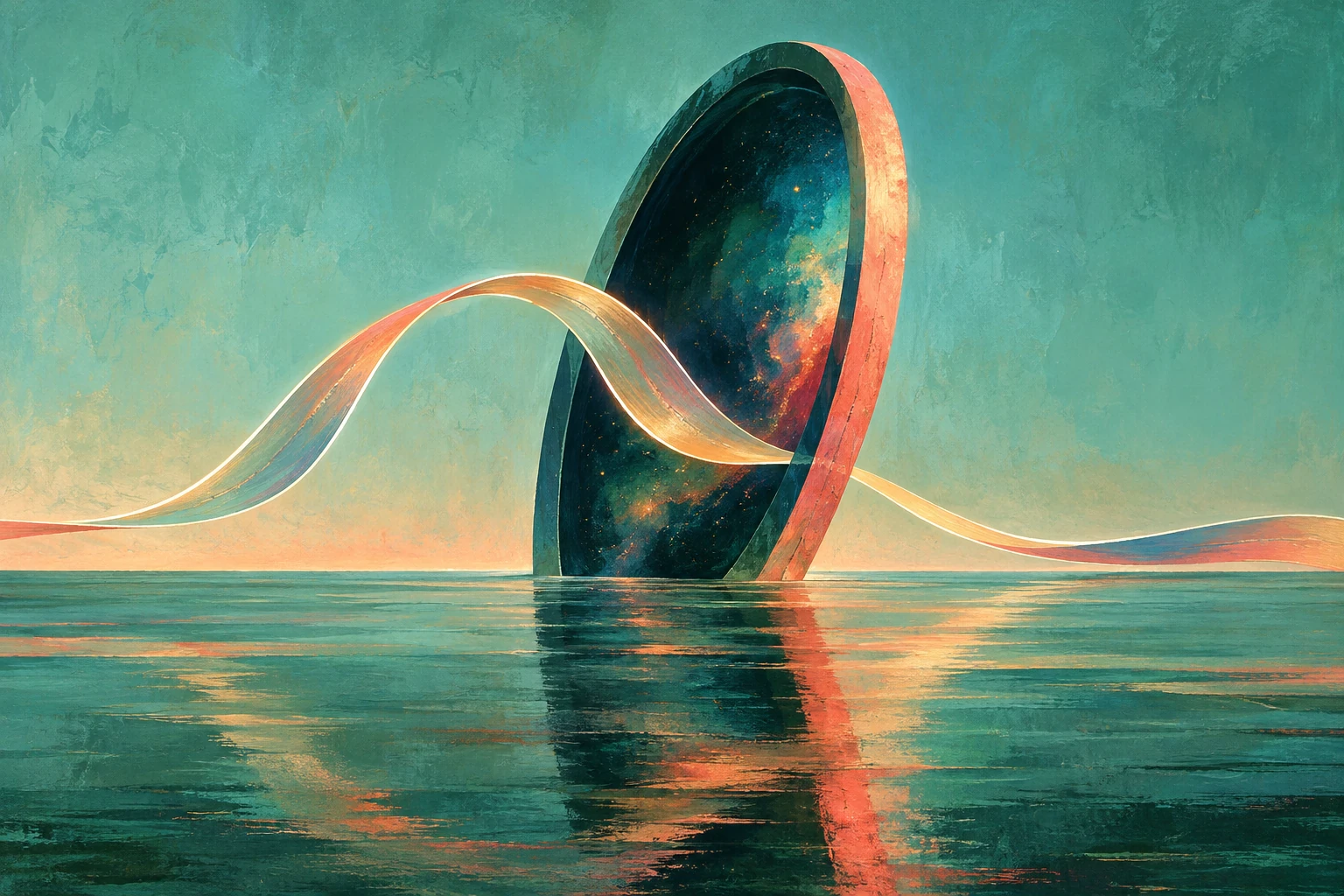
A calm open horizon is crossed by one unexpected tilted portal, through which a thin melody ribbon travels and returns smoothly to the same starting plane. A distant harmonic detour becoming home again is expressed spatially, never as a historical location.
An original editorial interpretation of the tune. This is an illustration, not an archival photograph or a documented reconstruction of a recording session.
Original Djangopedia illustration · AI-assisted, 2026
Illustration credits & provenance →Selected performances by notable Gypsy Jazz players and ensembles. Inclusion is editorial and does not imply an objective popularity ranking.
Joscho Stephan, Bruno Müller and Volker Kamp · Joscho Stephan
GypsyGuitarAcademy studio jam · YouTube title, uploader metadata and player availability checked 6 October 2026. Independent interpretation; proposed order awaits owner decision. No full-video musical audition claimed.
Stage 4N private performance. Independent guitar and bass performance; electric jazz contrast.
If playback is unavailable, use the source link.
 Jam // Out Of Nowhere - feat. Bruno MuellerJoscho Stephan, Bruno Müller and Volker Kamp · Joscho StephanGypsyGuitarAcademy studio jam · YouTube title, uploader metadata and player availability checked 6 October 2026. Independent interpretation; proposed order awaits owner decision. No full-video musical audition claimed.Stage 4N private performance. Independent guitar and bass performance; electric jazz contrast.✓ Featured
 Out Of Nowhere - MARION & SOBO (Sofa Sessions)Marion Lenfant-Preus and Alexander Sobocinski · Marion & Sobo BandSofa Sessions vocal/guitar duet · YouTube title, uploader metadata and player availability checked 6 October 2026. Independent interpretation; proposed order awaits owner decision. No full-video musical audition claimed.Stage 4N private performance. Artist explicitly describes gypsy swing grooves.Select video
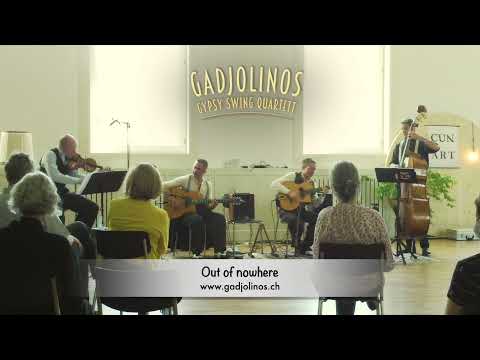 Out Of Nowhere - Gadjolinos Gypsy Swing Quartet - Live in Trun, 30. 5. 2021Gadjolinos Gypsy Swing Quartet · Christian Ruh2021 · Cun art festival, Trun, 30 May 2021 · YouTube title, uploader metadata and player availability checked 6 October 2026. Independent interpretation; proposed order awaits owner decision. No full-video musical audition claimed.Stage 4N private performance. Live violin and acoustic guitar quartet.Select video
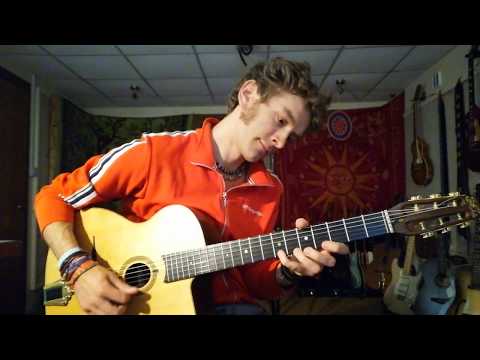 Gypsy Jazz Improv - Out of Nowhere (Version 2 of 2)Remi HarrisLate-night acoustic improvisation · YouTube title, uploader metadata and player availability checked 6 October 2026. Independent interpretation; proposed order awaits owner decision. No full-video musical audition claimed.Stage 4N private performance. Independent artist improvisation; not a performed study of Django’s solo.Select video
Write a two-note line through G–B♭m–E♭7–G. Play it with three different rhythms, then use its best version as a recurring answer in a full chorus.
Keep the chromatic detour the same volume as the tonic. Smooth voice leading is more revealing than suddenly accenting every outside chord.
Start at 80–100; explore 120–170 bpm
Write a two-note line through G–B♭m–E♭7–G. Play it with three different rhythms, then use its best version as a recurring answer in a full chorus.
Start below the suggested tempo. First hear four quarter-note clicks, then halve the click rate and place clicks on beats 2 and 4. Keep the same phrase length.
Out Of Nowhere — G major; 32-bar chorus, two related 16-bar halves. Agree the tempo, pickup, solo order and ending before the count.
Agree on the chromatic ii–V and final-half variations before adding personal substitutions.
Use an inner chromatic voice beneath the melody, keeping bass changes sparse.
Agree on the chromatic ii–V and final-half variations before adding personal substitutions.
Choose the singer’s comfortable key, then transpose the whole arrangement, including the introduction. Use the original lyric phrasing to shape breathing.
This player guide combines inherited recording evidence and editorial study notes. Musical study notes are editorial suggestions; compare them with the recording.
Composition background and credits ↗
Guitare Improvisation — backing track ↗
Feature photograph — Gypsy Jazz UK historical archive ↗
Original Djangopedia illustration · AI-assisted, 2026
An original editorial interpretation of the tune. This is an illustration, not an archival photograph or a documented reconstruction of a recording session.
Generated with the native image-generation tool on 2026-10-08; original editorial artwork, not a historical photograph.
Prompt: Use case: illustration-story. One original editorial feature illustration for Djangopedia's guide “Out Of Nowhere”. Landscape 1536 × 1024, opaque background. Scene: A calm open horizon is crossed by one unexpected tilted portal, through which a thin melody ribbon travels and returns smoothly to the same starting plane. A distant harmonic detour becoming home again is expressed spatially, never as a historical location. Musical basis from the guide: A tranquil major tonic is interrupted by a striking chromatic ii–V that returns unexpectedly home. The tune rewards smooth melodic connections between apparently distant chords. The supplied chart is G major; form: 32-bar chorus, two related 16-bar halves; feel: Swing. These describe musical inspiration, not visible writing. Historical context: Johnny Green and Edward Heyman’s 1931 song was popularised by Bing Crosby. Djangopedia lists Django performances in April 1937 and May 1939; the first entry places him among an ensemble including Coleman Hawkins and Benny Carter. Do not illustrate disputed historical claims or suggest this imagined scene is an archival session. Medium: painted surrealism. Dominant palette: pale turquoise coral and dark green. Composition: unexpected arch through open void. Human presence: none. Strong intentional design, clearly drawn/painted, distinctive material marks; keep essential subject safely within the central 70 percent width and middle 80 percent height for card crops. Maintain enough visual substance at thumbnail size. Broad inspiration observed in old photo, ONLY scale/rhythm and never a reference image: intimate profile; high contrast; close scale. Independently invent every pose, perspective, clothing, setting and lighting. Avoid: No face, smoking pose, generic guitar portrait or text. No photorealism, archival simulation, generated text, letters, numbers, labels, fake musical notation, logo, signature, watermark, fake dates, yellowed-paper patina, recognizable artwork or copied photograph. No imitation of any named artist. Render the art edge to edge without borders, mockup or typography. Batch A diversity compensation: avoid blue sky, drifting clouds, cypress trees, moon discs, generic Paris landmarks and curving terrace backdrops unless explicitly essential to the stated scene. Keep this composition tied to its precise stated subject; do not add an unrequested landscape or city. For figure scenes keep the specified standing/walking pose; no seated centered guitar portrait. For abstracts keep purely graphic materials and forms.
Photograph rights are documented separately in its credit. They do not establish the rights status of the composition or recording.
