Tune details
Music: Jerome Kern
Words: Otto Harbach
Published / composed / adapted — see history: 1933
Original key: Not established
Study level: Intermediate; advanced where the inherited roadmap needs reconstruction
 Djangopedia
A short minor-key standard whose second half moves through a chain of dominants. A compact form rewards careful pacing: each chorus can make one clear statement.
Hear the dominant chain as one connected line.

Owner content reviewed — 2026-10-06T18:42:02Z by admin. Coverage measures presence, not accuracy. Content review does not certify rights or musical perfection.
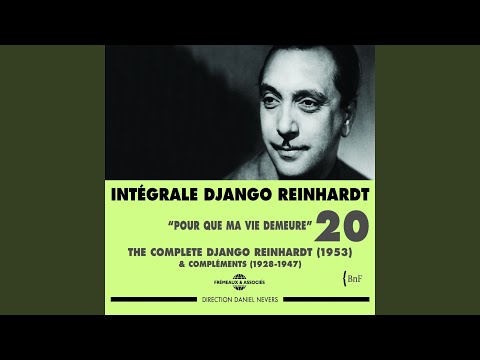
Django recordings for this tune. Uploader dates and take labels remain source claims; only an evidenced exact association enables a row’s Listen control.
Django Reinhardt
source-described; accuracy not independently verified
Uploader identifies this as Django Reinhardt’s performance; recording date and take require comparison with the discography.
| Entry | Year | Recording / session / release evidence | Listen |
|---|---|---|---|
| 01 | 1951 | Yesterdays, 1951, Iris Music CD 3001 845,Django Reinhardt (g); Art Simmons Piano Trio RTF Paris | — |
| 02 | 1952 | Yesterdays, Nov.1952, Collectables CD 7139, - Paris - ORTF Broadcast - Django Reinhardt (elg) Acc. by Aime Barelli et son Orchestre | — |
A dash means no video has been associated with this exact historical recording. Tune-level listening resources remain available above.
Yesterdays is credited here to Jerome Kern. The source date is 1933; publication, composition and later lyric adaptations may have separate dates. The inherited archive lists 2 recording entries, with dated entries spanning 1951–1952. These are archive rows, not a claim that every entry is a distinct released take. The linked recording rows preserve the original discographical wording. Compare their dates, matrices and personnel when choosing a performance to study.
Music: Jerome Kern
Words: Otto Harbach
Published / composed / adapted — see history: 1933
Original key: Not established
Study level: Intermediate; advanced where the inherited roadmap needs reconstruction
Listening task: Learn the melody as one long arc across the short form, allowing room at the final minor cadence. Mark the key, pickup, phrase lengths and ending before comparing another version.
Yesterdays, 1951, Iris Music CD 3001 845,Django Reinhardt (g); Art Simmons Piano Trio RTF Paris
Compare the first and last listed entries for tempo, instrumentation and arrangement. Do not infer identical takes from a shared title. Hear the dominant chain as one connected line.
Yesterdays, Nov.1952, Collectables CD 7139, - Paris - ORTF Broadcast - Django Reinhardt (elg) Acc. by Aime Barelli et son Orchestre
The inherited chart is in D minor. Confirm the backing track’s sounding key, pickup and complete form before playing; an instrument label may describe a transposed score.
Dm is prepared by Em7♭5–A7. The later chain A7–D7–G7–C7 moves toward F and B♭ before the final return to the minor dominant.
The inherited printout includes repeated material and symbols such as Em7sus. Confirm the intended arrangement and ending before treating every printed cell as a new bar.
| Dm/// | Em7b5/ A7/ | Dm/// | A7/// |

| Dm/// | Dm/// | Bm7b5/// | E7/// |

| A7+/// | D7/// | G7/// | C7/// |

| F7/// | Bb/// | Em7sus/// | A7///|

| Dm/// | Em7b5/ A7/ | Dm/// | A7/// |

| Dm/// | Dm/// | Bm7b5/// | E7/// |

| A7+/// | D7/// | G7/// | C7/// |

| F7/// | Bb/// | Dm/// | Dm/// :||
Original source ↗Guitare Improvisation
140 BPM · 5:50 · Owner-approved study selection. YouTube identity and player availability checked 6 October 2026; musical accuracy and exact take not independently certified.
Owner selected 6 October 2026. Preferred practice resource; confirm its sounding key and full form before playing.
If playback is unavailable, use the source link.
 Yesterdays (Jazz/Swing feel) 140 bpm : Backing TrackGuitare Improvisation140 BPM · 5:50 · Owner-approved study selection. YouTube identity and player availability checked 6 October 2026; musical accuracy and exact take not independently certified.Owner selected 6 October 2026. Preferred practice resource; confirm its sounding key and full form before playing.✓ Featured
 Yesterdays Backing TracksaxsolosThe inherited chart is in D minor. Confirm the backing track’s sounding key, pickup and complete form before playing; an instrument label may describe a transposed score. · 6:23Select video
Performed studies, transcriptions, TAB, notation and lessons for studying Django’s solo. Inclusion does not certify note-for-note accuracy.
No Django solo study aid yet. Know a useful resource — or want to record a study of this solo?
Follow a shared key, a harmonic idea or a familiar form. Keys refer to this site’s chart editions; other recordings may use a different key.
No sufficiently supported harmonic comparison has been added yet.
A small unlabelled stack of folded translucent paper layers, each carrying only one continuous dark descending thread that connects to the next. A compact minor chorus and dominant chain become recollection unfolding; no letters, dates, notation or fake old patina.
An original editorial interpretation of the tune. This is an illustration, not an archival photograph or a documented reconstruction of a recording session.
Original Djangopedia illustration · AI-assisted, 2026
Illustration credits & provenance →Selected performances by notable Gypsy Jazz players and ensembles. Inclusion is editorial and does not imply an objective popularity ranking.
Reinier Voet and Cravat Quartet · Reinier Voet - Topic
Django Festival 2, label-distributed audio · YouTube title, uploader metadata and player availability checked 6 October 2026. Independent interpretation; proposed order awaits owner decision. No full-video musical audition claimed.
Stage 4N private performance. The Orchard/Hot Club Records; Kern credits distinguish Yesterdays from Yesterday. 2002 release not asserted as recording year.
If playback is unavailable, use the source link.
 YesterdaysReinier Voet and Cravat Quartet · Reinier Voet - TopicDjango Festival 2, label-distributed audio · YouTube title, uploader metadata and player availability checked 6 October 2026. Independent interpretation; proposed order awaits owner decision. No full-video musical audition claimed.Stage 4N private performance. The Orchard/Hot Club Records; Kern credits distinguish Yesterdays from Yesterday. 2002 release not asserted as recording year.✓ Featured
 YesterdaysYehudi Menuhin and Stéphane Grappelli with John Etheridge · Yehudi Menuhin - TopicIcon: Menuhin and Grappelli, Warner Classics audio · YouTube title, uploader metadata and player availability checked 6 October 2026. Independent interpretation; proposed order awaits owner decision. No full-video musical audition claimed.Stage 4N private performance. Kern credits confirmed; violin, guitar and piano contrast. Recording year not inferred from copyright/reissue.Select video
Play one 16-bar chorus with only guide tones. In the next, repeat a single rhythmic idea and let the changing thirds reshape it.
Use a spacious texture at slower tempos. Keep the dominant chain connected and avoid making every chord a new dramatic arrival.
Start around 100–140 bpm; increase only after the form stays secure
Play one 16-bar chorus with only guide tones. In the next, repeat a single rhythmic idea and let the changing thirds reshape it.
Begin with four quarter-note clicks. Halve the click rate and hear beats 2 and 4 while maintaining the same phrase lengths.
Yesterdays — D minor; 16-bar core song; source prints an expanded arrangement. Agree the pickup, tempo and ending before counting in.
16-bar core song; source prints an expanded arrangement. The inherited printout includes repeated material and symbols such as Em7sus. Confirm the intended arrangement and ending before treating every printed cell as a new bar.
Start with melody and bass only. Add the following colour without interrupting the melody: Resolve C♯ on A7 into D.
Use a spacious texture at slower tempos. Keep the dominant chain connected and avoid making every chord a new dramatic arrival. Agree the full roadmap and signal the last head before it starts.
Choose a comfortable vocal key and transpose the whole arrangement, including its introduction and ending.
This player guide combines inherited recording evidence and editorial study notes. Musical study notes are editorial suggestions; compare them with the recording.
Djangopedia — inherited chart and recording rows ↗
Composition credits and background ↗
Feature photograph — source collection ↗
Original Djangopedia illustration · AI-assisted, 2026
An original editorial interpretation of the tune. This is an illustration, not an archival photograph or a documented reconstruction of a recording session.
Generated with the native image-generation tool on 2026-10-08; original editorial artwork, not a historical photograph.
Prompt: Use case: illustration-story. One original editorial feature illustration for Djangopedia's guide “Yesterdays”. Landscape 1536 × 1024, opaque background. Scene: A small unlabelled stack of folded translucent paper layers, each carrying only one continuous dark descending thread that connects to the next. A compact minor chorus and dominant chain become recollection unfolding; no letters, dates, notation or fake old patina. Musical basis from the guide: A short minor-key standard whose second half moves through a chain of dominants. A compact form rewards careful pacing: each chorus can make one clear statement. The supplied chart is D minor; form: 16-bar core song; source prints an expanded arrangement; feel: Swing. These describe musical inspiration, not visible writing. Historical context: Yesterdays is credited here to Jerome Kern. The source date is 1933; publication, composition and later lyric adaptations may have separate dates. Do not illustrate disputed historical claims or suggest this imagined scene is an archival session. Medium: charcoal and pastel. Dominant palette: pale grey restrained rose and slate violet. Composition: folded layers with returning descending thread. Human presence: none. Strong intentional design, clearly drawn/painted, distinctive material marks; keep essential subject safely within the central 70 percent width and middle 80 percent height for card crops. Maintain enough visual substance at thumbnail size. Broad inspiration observed in old photo, ONLY scale/rhythm and never a reference image: two intimate figures; tall enclosure; contrast between large and small scale. Independently invent every pose, perspective, clothing, setting and lighting. Avoid: No caravan, parent-child recreation, sepia aged paper or text. No photorealism, archival simulation, generated text, letters, numbers, labels, fake musical notation, logo, signature, watermark, fake dates, yellowed-paper patina, recognizable artwork or copied photograph. No imitation of any named artist. Render the art edge to edge without borders, mockup or typography. Batch B diversity compensation: make light and midtone areas substantial; avoid near-black dominant backdrops, violet monochrome, empty chair/stool/bench compositions, repeated sunset terraces and generic cloud panoramas. Preserve the stated tune-specific scene. Human figures remain standing or peripheral except an explicitly named ensemble; no centered seated Django portrait. For graphic images use clearly plain colour shapes, no ruled parallel staffs, circles with stems, note-like marks or typography.
Photograph provenance and rights are stated separately. Attribution does not establish permission.