Tune details
Music: Cole Porter
Words: Cole Porter
Documented in archive: 1935
Original key: Not established
Study level: Intermediate; melody, pulse and arrangement awareness
 Djangopedia
A narrative-ballad study in patience, phrase endings and accompaniment that follows the lead.
Speak the rhythm of one phrase without quoting lyrics, then sing its melody.
Owner content reviewed — 2026-10-19T04:10:12Z by admin. Coverage measures presence, not accuracy. Content review does not certify rights or musical perfection.
Django recordings for this tune. Uploader dates and take labels remain source claims; only an evidenced exact association enables a row’s Listen control.
Django Reinhardt
source-described; accuracy not independently verified
Uploader identifies this as Django Reinhardt’s performance; recording date and take require comparison with the discography.
| Entry | Year | Recording / session / release evidence | Listen |
|---|---|---|---|
| 01 | 1935 | Miss Otis Regrets,CPT 1857 ,"Fremeaux FA 303, Classics 703",4/3/35 - Paris - Patrick et Son Orchestre featuring Django Reinhardt (g). | — |
| 02 | 1936 | Miss Otis Regrets,Fremeaux FA 304,29/2/36 - Jean Sablon and Friends | — |
A dash means no video has been associated with this exact historical recording. Tune-level listening resources remain available above.
Porter’s narrative song appears in the archive in more than one context. A later informal medley or vocal fragment is not evidence of a full Django guitar performance.
Music: Cole Porter
Words: Cole Porter
Documented in archive: 1935
Original key: Not established
Study level: Intermediate; melody, pulse and arrangement awareness
A narrative-ballad study in patience, phrase endings and accompaniment that follows the lead.
Miss Otis Regrets,CPT 1857 ,"Fremeaux FA 303, Classics 703",4/3/35 - Paris - Patrick et Son Orchestre featuring Django Reinhardt (g).
Follow the dramatic melody and its phrase endings before choosing accompaniment density. A complete score is needed before treating spoken-style phrasing as free metre. Check the video key before playing with the chart.
Follow the dramatic melody and its phrase endings before choosing accompaniment density. A complete score is needed before treating spoken-style phrasing as free metre.
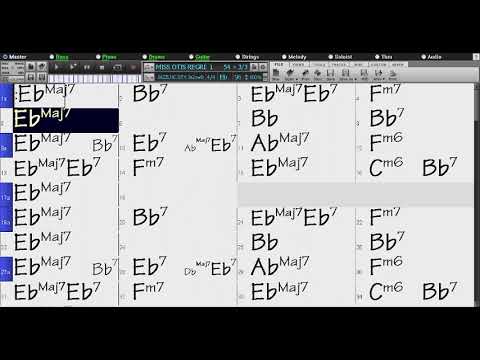
No complete verified chart is supplied. The exercises are listening and practice suggestions, not a substitute score.
No readable chord chart has been added for this title.
Luc Maes
Swing · 96 BPM · 7m13s · Video available when checked; creator-described attribution.
Creator-provided play-along; instrumentation and feel vary by selection. Check the key and full arrangement before joining in; the guide chart may use another key. Tempo is the creator’s stated value.
If playback is unavailable, use the source link.
Performed studies, transcriptions, TAB, notation and lessons for studying Django’s solo. Inclusion does not certify note-for-note accuracy.
No Django solo study aid yet. Know a useful resource — or want to record a study of this solo?
Follow a shared key, a harmonic idea or a familiar form. Keys refer to this site’s chart editions; other recordings may use a different key.
No sufficiently supported harmonic comparison has been added yet.
No match is established in the current chart metadata.
No match is established in the current chart metadata.
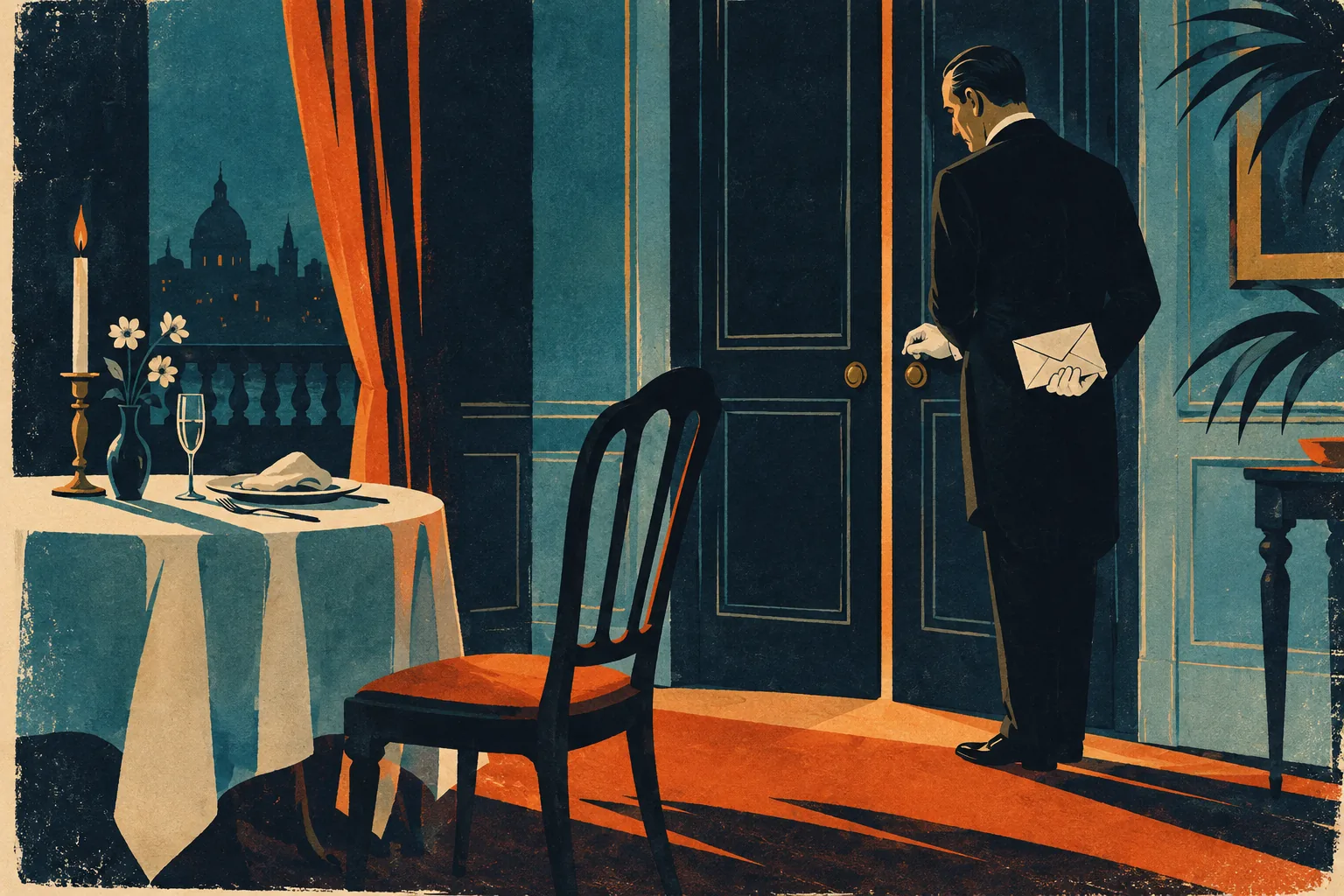
Owner-selected illustration. An impeccably dressed butler holds a sealed unlettered envelope at a closed dining-room door; a small untouched table and empty chair suggest a tragic absence. Dark restrained Cole Porter narrative irony, no violence or comic trivialization of the tragedy.
Original AI-assisted editorial artwork inspired by the tune; not a documented historical scene.
Original AI-assisted illustration created for Djangopedia
Illustration credits & provenance →Selected performances by notable Gypsy Jazz players and ensembles. Inclusion is editorial and does not imply an objective popularity ranking.
Notable Gypsy Jazz performances are being curated.
Speak the rhythm of one phrase without quoting lyrics, then sing its melody. Play a short answer only after the phrase has fully ended.
Keep the accompaniment quiet and allow expressive delivery without losing the underlying count. Agree any rubato opening in advance.
55–90 bpm
Speak the rhythm of one phrase without quoting lyrics, then sing its melody. Play a short answer only after the phrase has fully ended.
Count quarter notes first. Then place the click on beats 2 and 4 at half the click rate, keeping the phrase length unchanged.
Confirm the chosen arrangement key; Confirm the complete form. Agree the arrangement, pickup and ending before counting in.
The Miss Otis Regrets/Blue Drag clip contains more than one tune and is not a certified complete solo study.
Keep the melody uppermost and begin with a single bass note under each harmony. Keep the accompaniment quiet and allow expressive delivery without losing the underlying count. Agree any rubato opening in advance.
Keep the accompaniment quiet and allow expressive delivery without losing the underlying count. Agree any rubato opening in advance.
Choose a comfortable singing key and transpose the accompaniment as a whole; lyrics are not reproduced here.
This player guide combines inherited recording evidence and editorial study notes. Musical study notes are editorial suggestions; compare them with the recording.
Djangopedia full discography ↗
Reissue publisher discography and credits ↗
Inherited chart and recording evidence
Original AI-assisted illustration created for Djangopedia
Original AI-assisted editorial artwork inspired by the tune; not a documented historical scene.
Generated with the native image-generation tool on 2026-10-26; original editorial artwork, not a historical photograph.
Prompt: Use case: stylized-concept. Create one finished original landscape 1536x1024 (3:2) raster illustration for Djangopedia, tune Miss Otis Regrets. Tune context for interpretation only: Porter’s narrative song appears in the archive in more than one context. A later informal medley or vocal fragment is not evidence of a full Django guitar performance. Scene: An impeccably dressed butler holds a sealed unlettered envelope at a closed dining-room door; a small untouched table and empty chair suggest a tragic absence. Dark restrained Cole Porter narrative irony, no violence or comic trivialization of the tragedy. Art direction: Minimal mid-century musical still-life print: crisp hand-cut shapes, ingenious symbolic composition, uneven hand-pulled ink edges, very few carefully chosen details. Palette: deep indigo, dusty turquoise, burnt orange and warm paper. Subtle dry ink and paper texture, controlled print misregistration. Make it an artwork with a memorable singular idea, readable as a thumbnail and rewarding at full size; vary viewpoint and composition. Constraints: entirely original composition, not a copy of an artist's print. No title, words, notation, logos or watermark. No photorealism, glossy 3D, gradients, airbrushed romantic haze, generic sunset or decorative hearts. If Django appears, swept-back dark hair, pencil moustache and a distinct mature individual face; period clothes, no ethnic stereotypes. Respect plausible instruments and hands, keep key subjects within frame. Use strong flat ink shapes rather than photorealistic rendering.