Djangopedia
← Explore the tunes
Player guide

I Won't Dance

A playful standard for keeping a dance pulse steady beneath an independent, syncopated melody.

If you study one thing

Clap the head rhythm while singing only its landing notes.

Original serigraph-style illustration for i won t dance
Original AI-assisted illustration created for Djangopedia
Illustration credits
Chart keyNot established
FormNot established
FeelSwing
Meter4/4
MusicJerome Kern
Guide coverage9 / 12 sections present

Owner content reviewed — 2026-10-18T23:08:24Z by admin. Coverage measures presence, not accuracy. Content review does not certify rights or musical perfection.

See what is here and what is missing
  • ✓ Recording evidence
  • ○ Key & form
  • ○ Chart
  • ✓ History
  • ✓ Playing notes
  • ✓ Practice plan
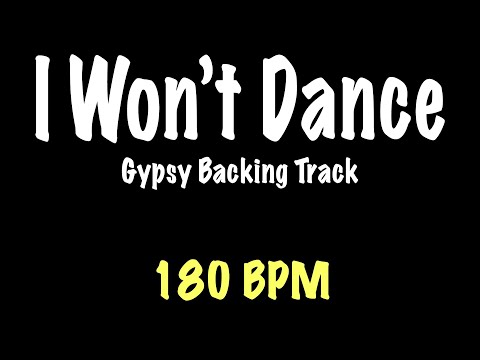
  • ✓ Backing track
  • ✓ Django recording
  • ○ Django solo study aid
  • ✓ Illustration
  • ✓ Sources
  • ✓ Difficulty

Django's Recordings

Django recordings for this tune. Uploader dates and take labels remain source claims; only an evidenced exact association enables a row’s Listen control.

1 historical recording entries · source text preserved
EntryYearRecording / session / release evidenceListen
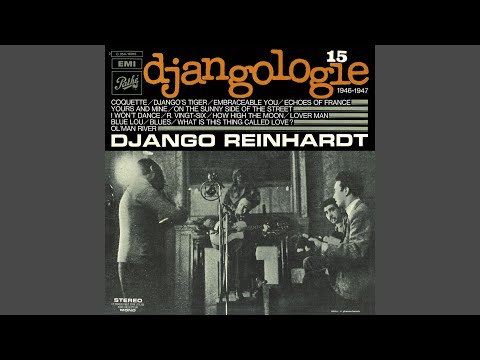
011946I Won't Dance,OSW 419-1,"Fremeaux FA 313, Classics 945, Mosaic MD6-190(6 CD Set). ","15/5/46 - Paris - QHCF - Hubert Rostaing (cl,as), Django Reinhardt (g), Jaques Dieval (p), Lucien Simoens (b), Arthur Motta (d)"—

A dash means no video has been associated with this exact historical recording. Tune-level listening resources remain available above.

History & Listening

Kern’s song has an earlier Hammerstein–Harbach lyric and a later Fields–McHugh revision. The credited lyricists reflect that version history rather than five simultaneous authors of one lyric.

Tune details

Music: Jerome Kern

Words: Oscar Hammerstein II, Otto Harbach, Dorothy Fields, Jimmy McHugh

Source-attributed publication / composition: 1934

Original key: Not established

Study level: Intermediate; clap the head rhythm while singing only its landing notes

Melody & head

  • A playful standard for keeping a dance pulse steady beneath an independent, syncopated melody.
  • Do not mix the introduction from one arrangement with the chorus roadmap of another.

Study the inherited Django recording evidence

A playful standard for keeping a dance pulse steady beneath an independent, syncopated melody.

Session evidence

I Won't Dance,OSW 419-1,"Fremeaux FA 313, Classics 945, Mosaic MD6-190(6 CD Set). ","15/5/46 - Paris - QHCF - Hubert Rostaing (cl,as), Django Reinhardt (g), Jaques Dieval (p), Lucien Simoens (b), Arthur Motta (d)"

Study the proposed backing arrangement ↗

Separate the rhythmic identity of the head from the harmony underneath it. Without a verified grid, work from one arrangement and mark its phrase endings before attempting a reharmonization. Check the video key before playing with the chart.

Chart & Form

Separate the rhythmic identity of the head from the harmony underneath it. Without a verified grid, work from one arrangement and mark its phrase endings before attempting a reharmonization.

A complete chord chart has not yet been verified. The exercises are editorial listening and practice suggestions, not a replacement score.

No readable chord chart has been added for this title.

Play along

Study Django's Solo

Performed studies, transcriptions, TAB, notation and lessons for studying Django’s solo. Inclusion does not certify note-for-note accuracy.

No Django solo study aid yet. Know a useful resource — or want to record a study of this solo?

Similar tunes

Follow a shared key, a harmonic idea or a familiar form. Keys refer to this site’s chart editions; other recordings may use a different key.

Related chord movement

No sufficiently supported harmonic comparison has been added yet.

Same chart key

No match is established in the current chart metadata.

Same form

No match is established in the current chart metadata.

Behind the illustration

Original serigraph-style illustration for i won t dance

Original AI-assisted editorial artwork inspired by the tune’s mood. It does not depict a documented historical event.

Original AI-assisted illustration created for Djangopedia

Illustration credits & provenance →

Notable Gypsy Jazz Performances

Selected performances by notable Gypsy Jazz players and ensembles. Inclusion is editorial and does not imply an objective popularity ranking.

Improvisation

Target notes & voice leading

  • Separate the rhythmic identity of the head from the harmony underneath it. Without a verified grid, work from one arrangement and mark its phrase endings before attempting a reharmonization.
  • Sing the destination note before connecting it to the preceding chord.

Pitch choices

  • Begin with the named chord tones. Add passing notes only after the melody and cadence are secure.

Clap the head rhythm while singing only its landing notes. Then play those notes with rests in place of the connecting runs.

Comping & voicings

Let the rhythm section supply an even dance pulse; avoid doubling every syncopation in the melody.

Voicing note sets

  • Let the rhythm section supply an even dance pulse; avoid doubling every syncopation in the melody.

Keep the accompaniment clear

  • First establish an even pulse; add rhythmic variation only when the melody leaves space.
  • Do not mix the introduction from one arrangement with the chorus roadmap of another.

Practice room

80–120 bpm, then increase gradually

Your assignment

Clap the head rhythm while singing only its landing notes. Then play those notes with rests in place of the connecting runs.

Loop these changes

  • Clap the head rhythm while singing only its landing notes. Then play those notes with rests in place of the connecting runs.

Metronome

Count quarter notes first. Then place the click on beats 2 and 4 at half the click rate, keeping the phrase length unchanged.

Transposition

  • Move one short cadence to a nearby key by naming its chord tones, then return to the chosen study key.

At the session

Confirm the chosen arrangement key; Confirm the complete form. Agree the arrangement, pickup and ending before counting in.

Start together

  • Count a clear tempo and use the final cadence of the agreed arrangement.

Finish together

  • Cue the final tonic together; agree any tag before starting.

Do not mix the introduction from one arrangement with the chorus roadmap of another.

  • Do not mix the introduction from one arrangement with the chorus roadmap of another.

Arranging the tune

Solo guitar

Keep the melody uppermost and begin with a single bass note under each harmony. Let the rhythm section supply an even dance pulse; avoid doubling every syncopation in the melody.

Trio or larger group

Let the rhythm section supply an even dance pulse; avoid doubling every syncopation in the melody.

Vocal considerations

Choose a comfortable singing key and transpose the accompaniment as a whole; lyrics are not reproduced here.

Sources & credits

This player guide combines inherited recording evidence and editorial study notes. Musical study notes are editorial suggestions; compare them with the recording.

Djangopedia full discography ↗

Credit / historical reference ↗

  • Source-attributed credits and historical context; not an exact take mapping.

Inherited Djangopedia chart and recording evidence

  • Existing chart and discographic rows; retained as inherited evidence.
Illustration credit & provenance

Original AI-assisted illustration created for Djangopedia

Original AI-assisted editorial artwork inspired by the tune’s mood. It does not depict a documented historical event.

Generated with the native image-generation tool on 2026-10-18; original editorial artwork, not a historical photograph.

Prompt: Original 1536x1024 horizontal 3:2 editorial serigraph for the jazz tune i won t dance. An anonymous seated guitarist and an empty dance floor with a pair of dance shoes beside a chair, playful syncopated floor tiles. Match the Stage 6C visual vocabulary: bold simplified angular silhouettes, asymmetrical negative space, flat limited ink palette of dusty rose, teal, ink black and ivory, rough ink edges, tactile paper grain, restrained whimsical mid-century shapes. Handmade silk-screen print, crisp graphic design, no gradients, no photorealism, no text or lettering, no border. Entirely original scene, no claim of historical event. Keep all heads and musical instruments inside frame.

Research & rights notes
  • Exact YouTube-to-matrix/take associations are not established. Historical rows remain inherited archive evidence.
  • No complete chart is present in the inherited archive. This is a listening-led study guide; confirm a reliable arrangement before a jam.
  • No chart key is asserted; choose and verify the key of the selected arrangement.
  • No qualifying new Django solo recreation was confirmed in this bounded search.